Request a price list

Thank you! We’ll get back to you shortly!
Oops! Something went wrong while submitting the form.
SHOW 03
/
ARCHEO LOGICAL CAMERA
6th Dec '25
30th Jan '26
/
Kara, Parade Ground, Fort Kochi
“A person does not belong to a place until there is someone of his own dead under the ground”
- Gabriel Garcia Marquez
One Hundred Years of Solitude
ARCHEO LOGICAL CAMERA
Mohamed A
Art and history lie at the soul of Kara.

Our gallery sits within a quiet colonial era bungalow where stories from the past meet contemporary imagination.

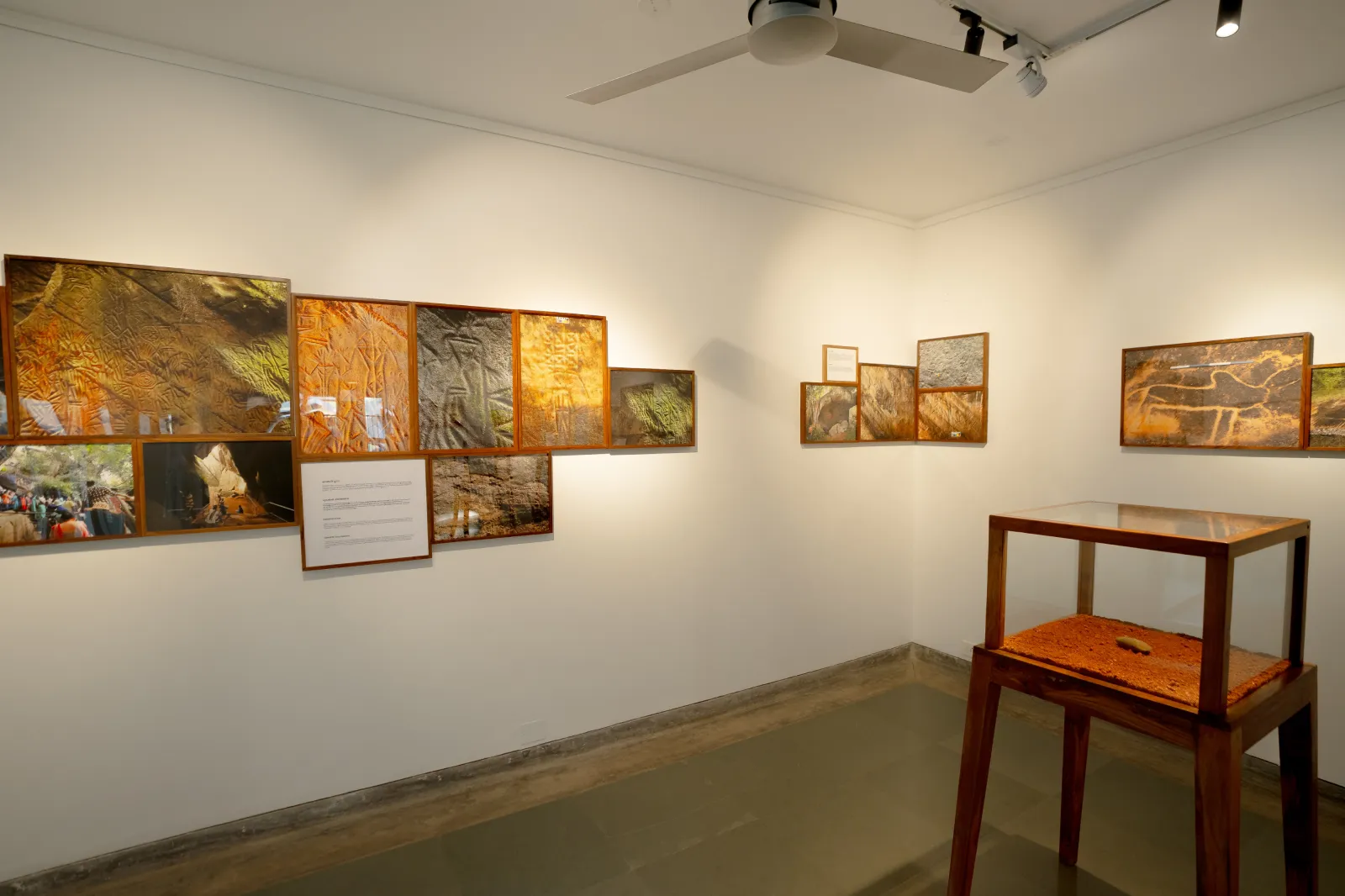
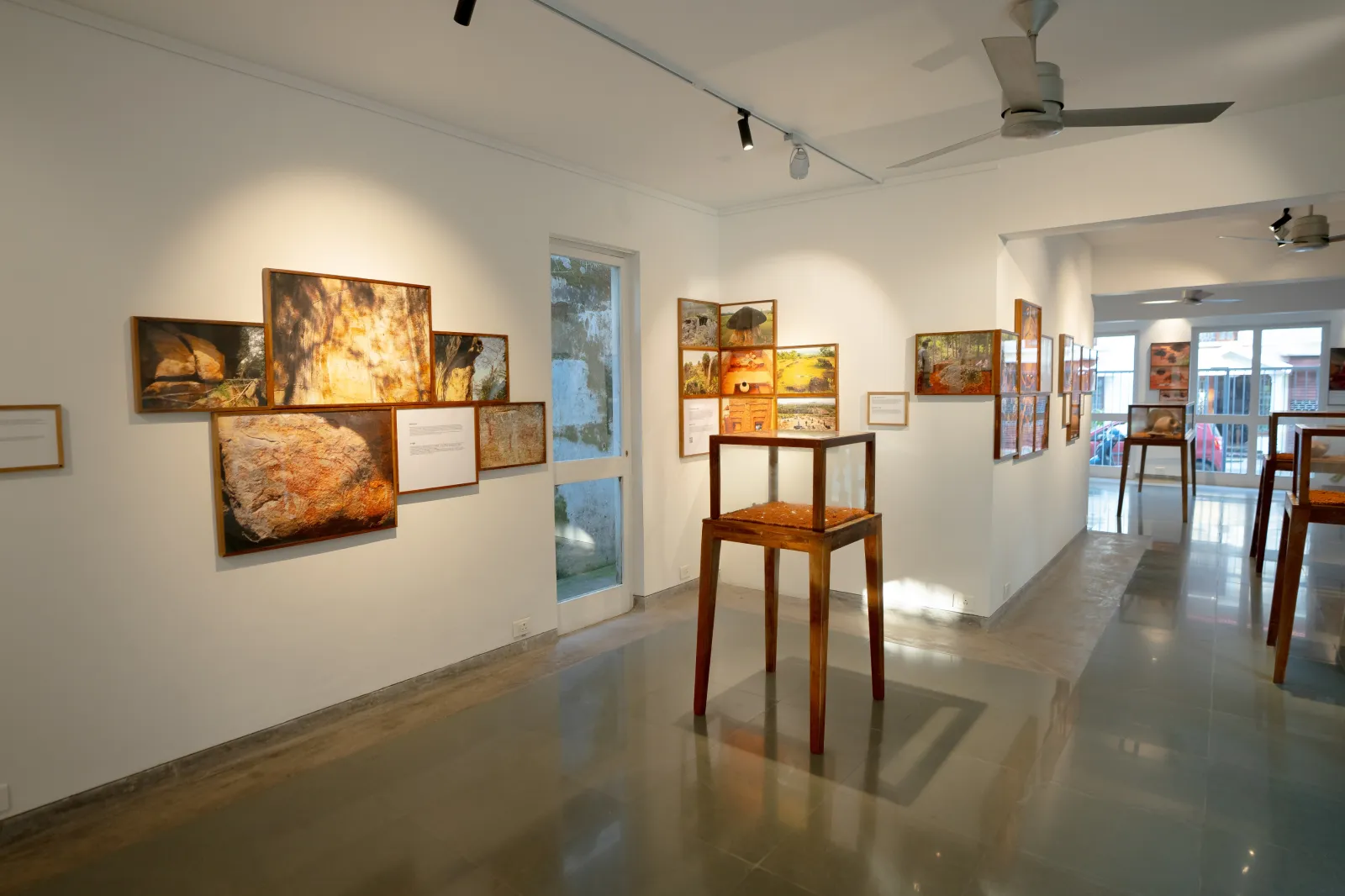
Archeo Logical Camera, our newest exhibition, finds a natural home here. The exhibition brings archaeological record photographs into focus through the photographer’s lens, where scientific documentation meets artistic interpretation.
Photographs in archaeology
They are more often than not taken for granted.

They are technical aids, framed by figure numbers and descriptions in reports and articles. Their function is primarily illustrative, the figure of the photographer a spectral non-presence.
What does it then mean for the archaeologist to bring the photographs to the forefront, to see them as artefacts? What does the photographer see at an archaeological site?

This body of work is Mohamed’s photographic journey with archaeology, its sites, and its practices.

It is a viewing of the photographs, of rearranging and juxtaposing them—bringing the photographer and the archaeologist together.

What is it that we see? Is the photograph a record, a note, an artefact? Is the photographer an interlocutor or an artist? What is absent from the photograph—the present, shadows, tools, footprints? What led up to a frame? What is implied? Do we look for the photographer, or the archaeologist, or both in the photograph? What are the journeys that an archaeological photograph takes?
Kara Hotel fort Kochi
The past on display
The exhibition unfolds across three distinct galleries.
Kara Hotel fort Kochi
Art - The Rock Art Gallery:
Using rock as their canvas, early humans left behind some of the first traces of creativity we know. These images are not just marks on stone—they are gestures, stories, and instincts made visible.
Kara Hotel fort Kochi
Death – The Megalith Gallery:
A lot about life can be learnt through death. This section explores ancient burial practices and rituals, revealing how communities honoured the dead—and what those rituals tell us about belief, memory, and meaning.
Kara Hotel fort Kochi
Trade – The Pattanam Gallery:
Trade takes over this section. On land and over water, trade shaped lives, cultures, and connections. This gallery traces those exchanges, mapping the flow of goods, people, and ideas that once passed through thriving trade routes.

In addition to photographs of the actual dig sites, we also have on display artefacts from the sites, loaned to us by the Archaeological Department. Thoughtfully curated, each piece within the galleries invites you to imagine the worlds they once belonged to.
Art - Rock Art Gallery
Rock art is regarded as one of the earliest expressions of human creativity, consisting of man-made markings on natural stone surfaces. It includes petroglyphs, carved or pecked into rock; pictographs, painted in simple, often monochromatic forms; and the rarer polychrome paintings.

Largely abstract, these works depict human and animal figures, everyday objects, and cultural symbols such as wheels, carts, trees, and letters. Enigmatic in form, they offer glimpses into the spiritual and cultural lifeworlds of early communities.

Created on granite outcrops and laterite formations, these artworks transformed natural landscapes into lasting records of thought, belief, and experience. In this section, you’ll journey across regions to discover the distinctive rock art traditions each one embraced.
Ettukudukka
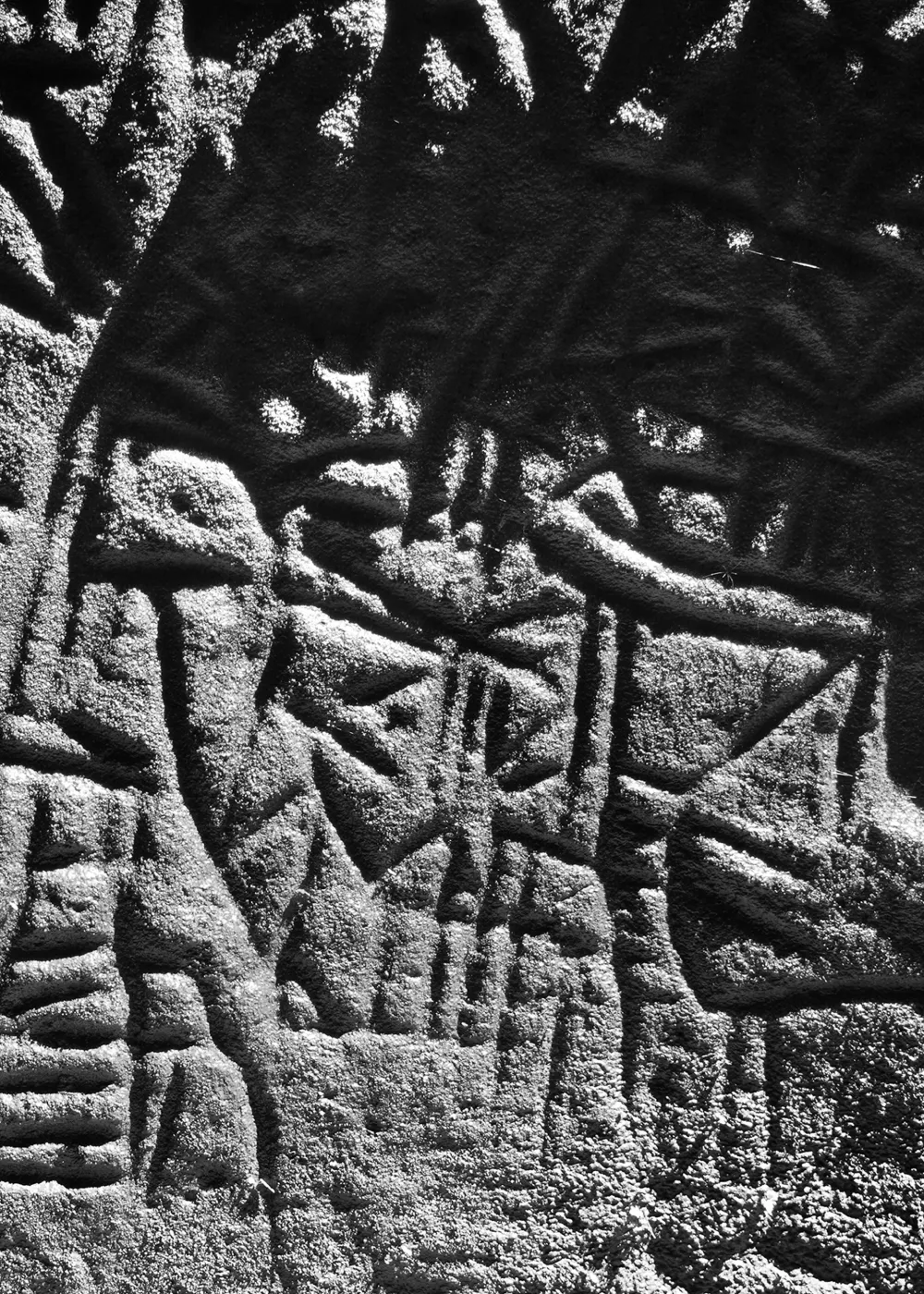
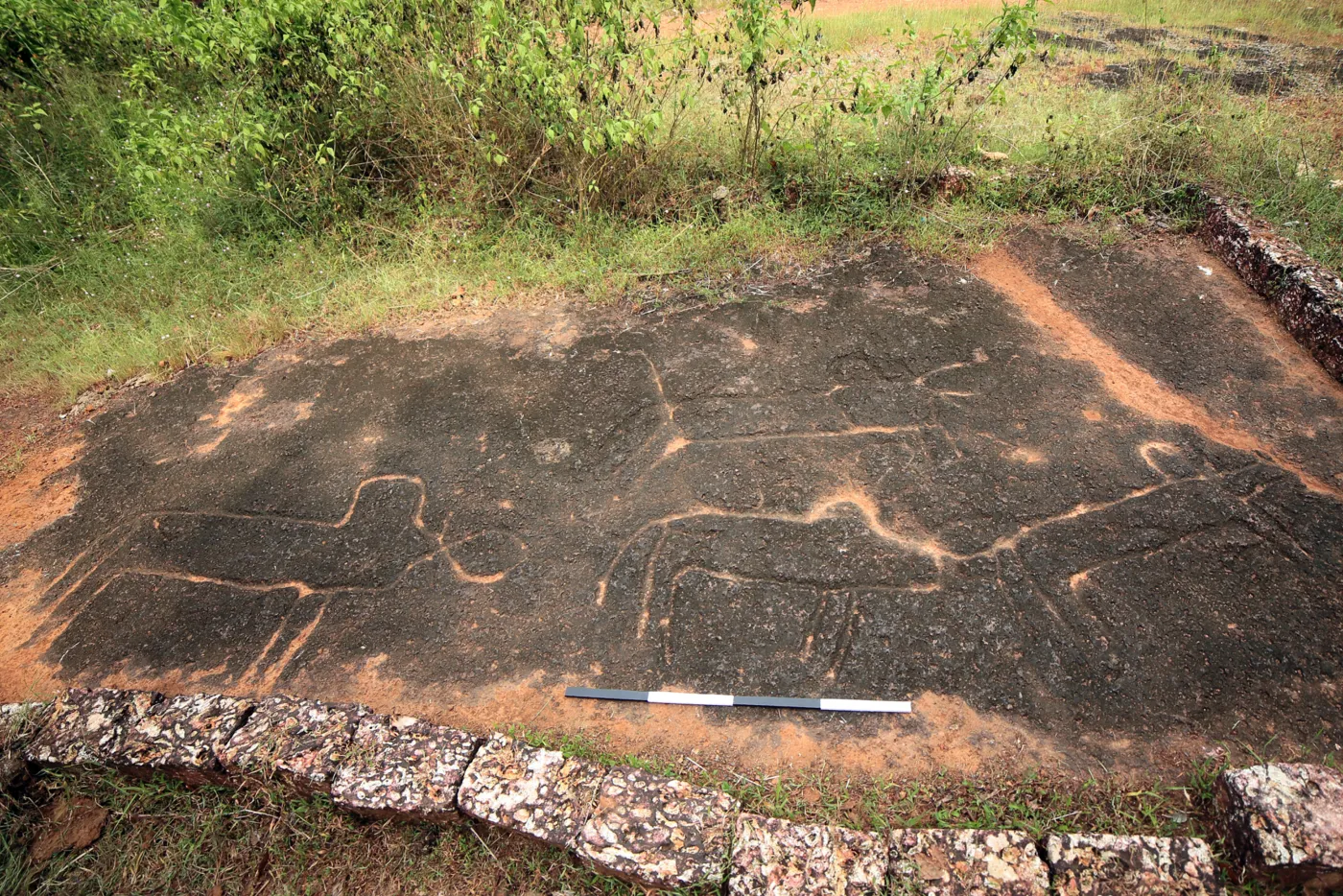
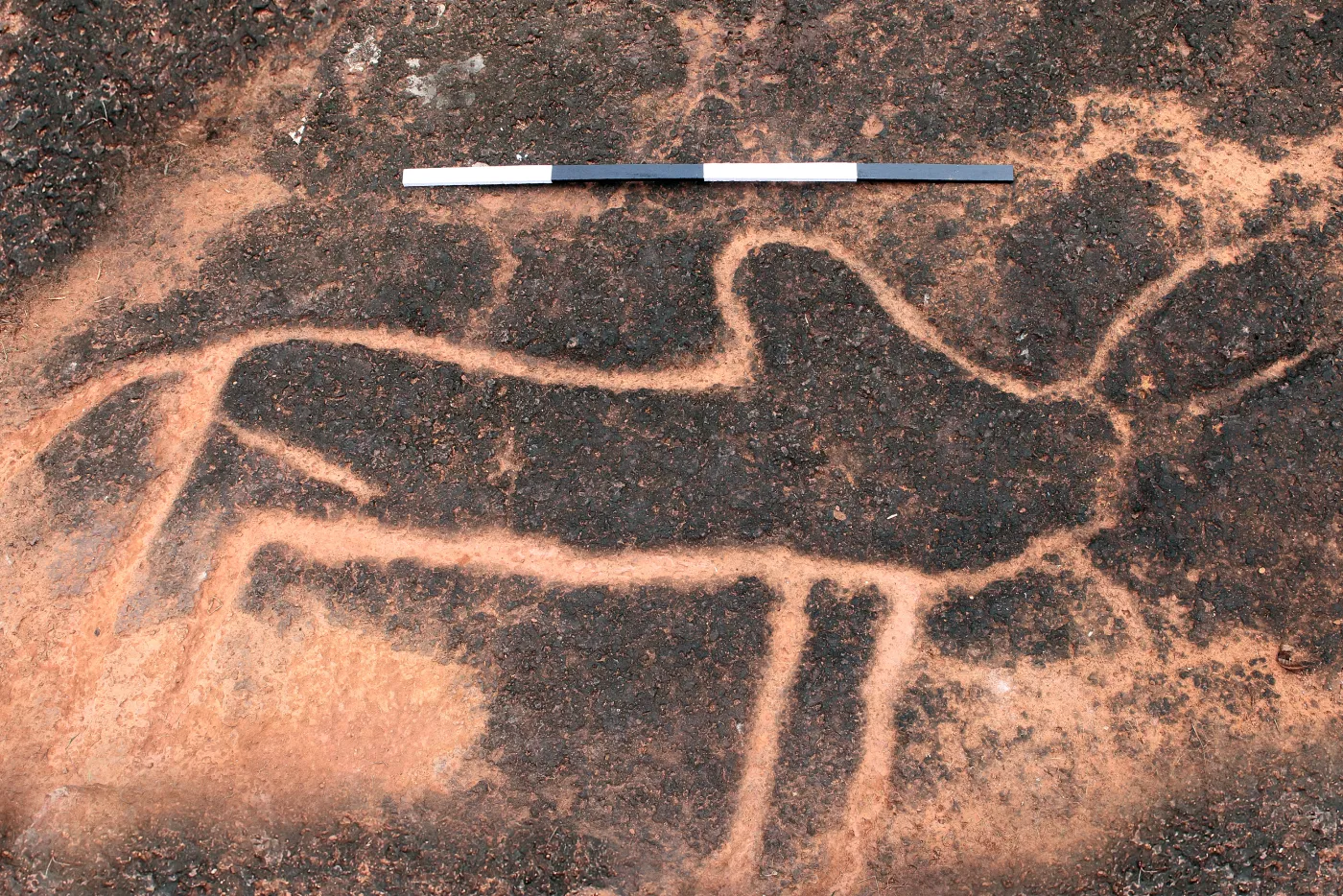
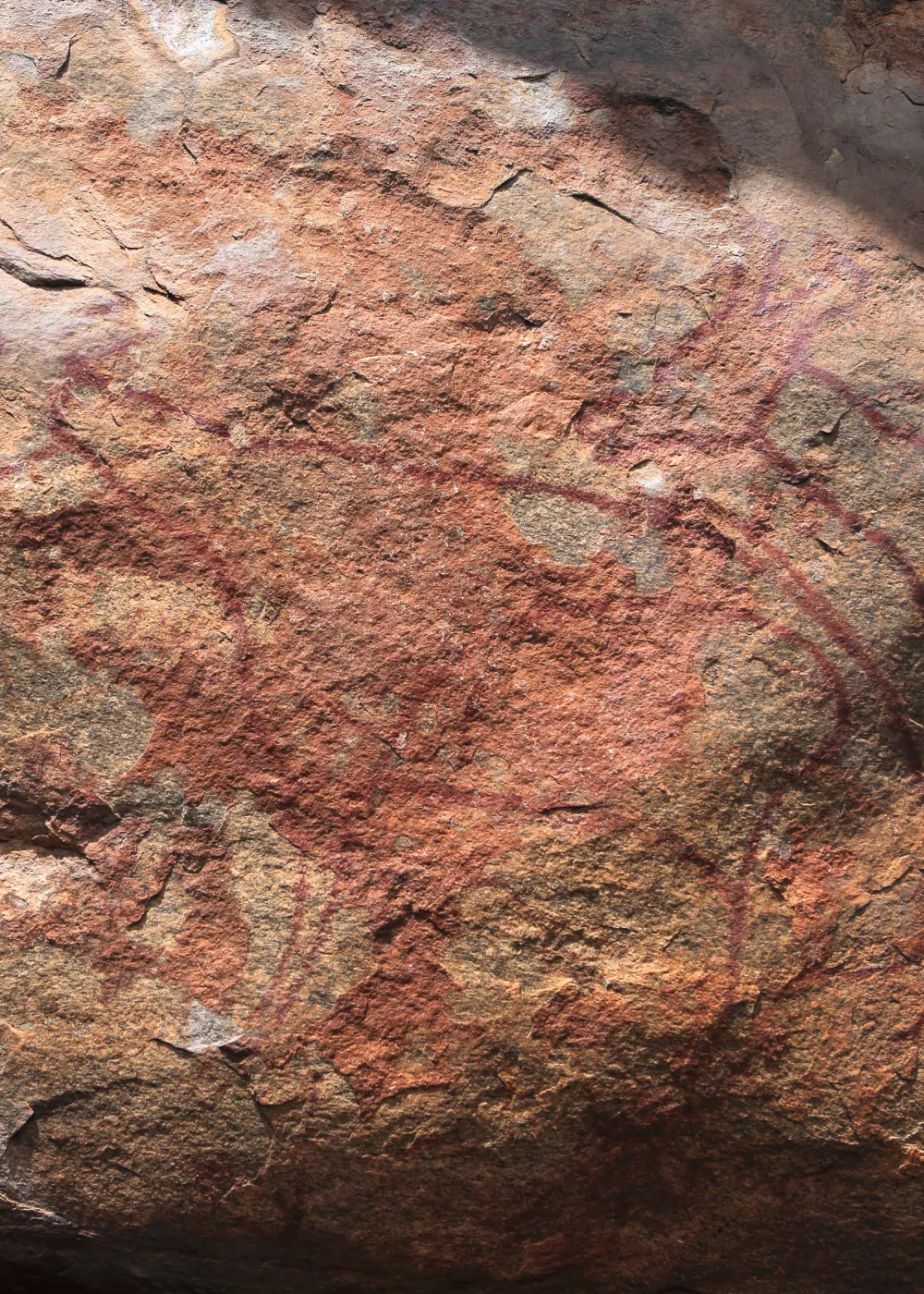
At Ettukudukka in Kannur, engravings carved into exposed laterite transform a flat topped hill into a cultural landmark. These geoglyphs depict herds of eastward moving cattle with pronounced humps and horns, repeating a shared visual language across multiple compositions. Similar carvings along the Konkan Coast suggest continuity in symbolic representation and landscape use by past communities.
Kara Hotel fort Kochi
Bromo - 80 x 60 cm
Kara Hotel fort Kochi
Caldera - 120 x 90 cm
Marayoor
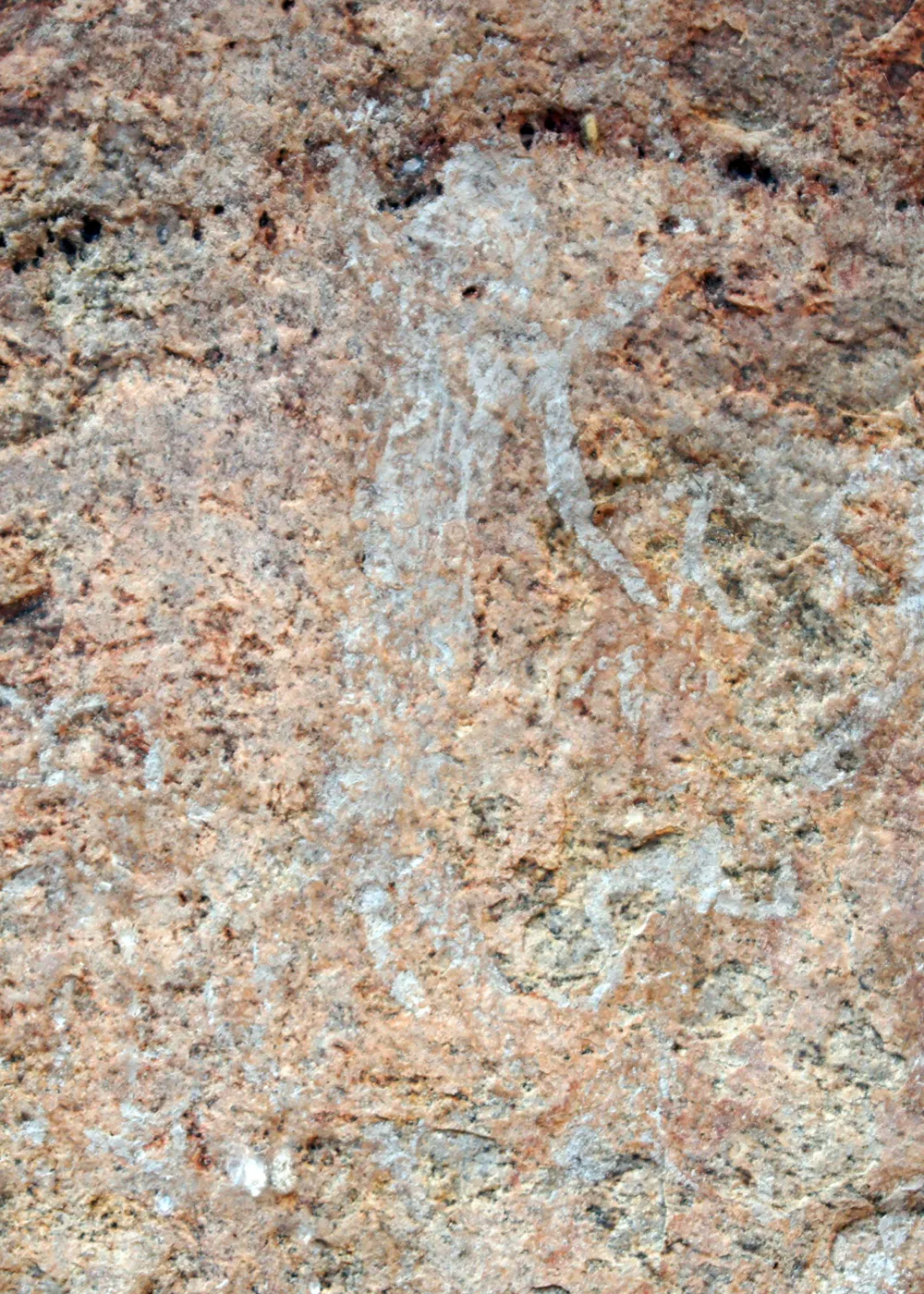
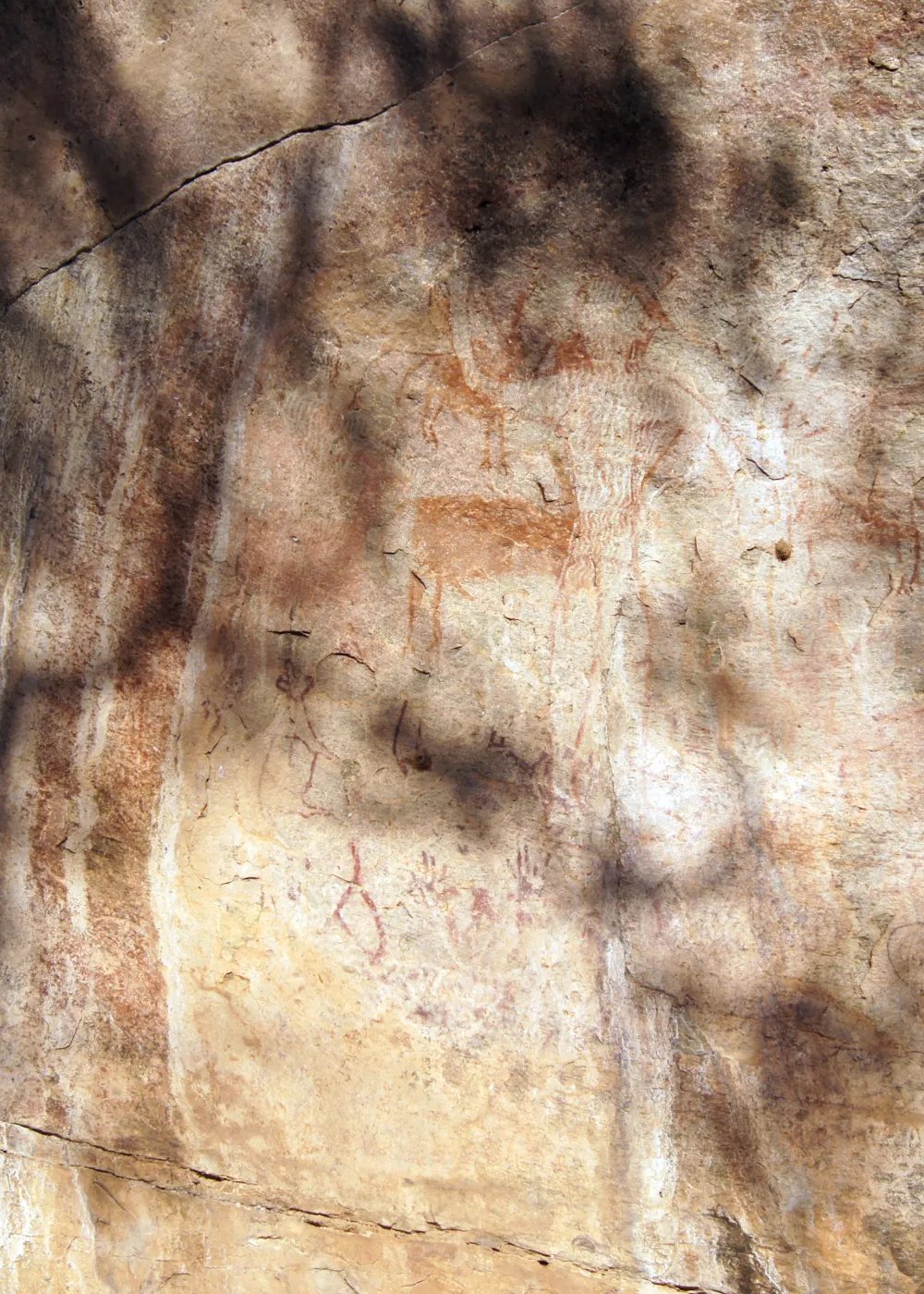
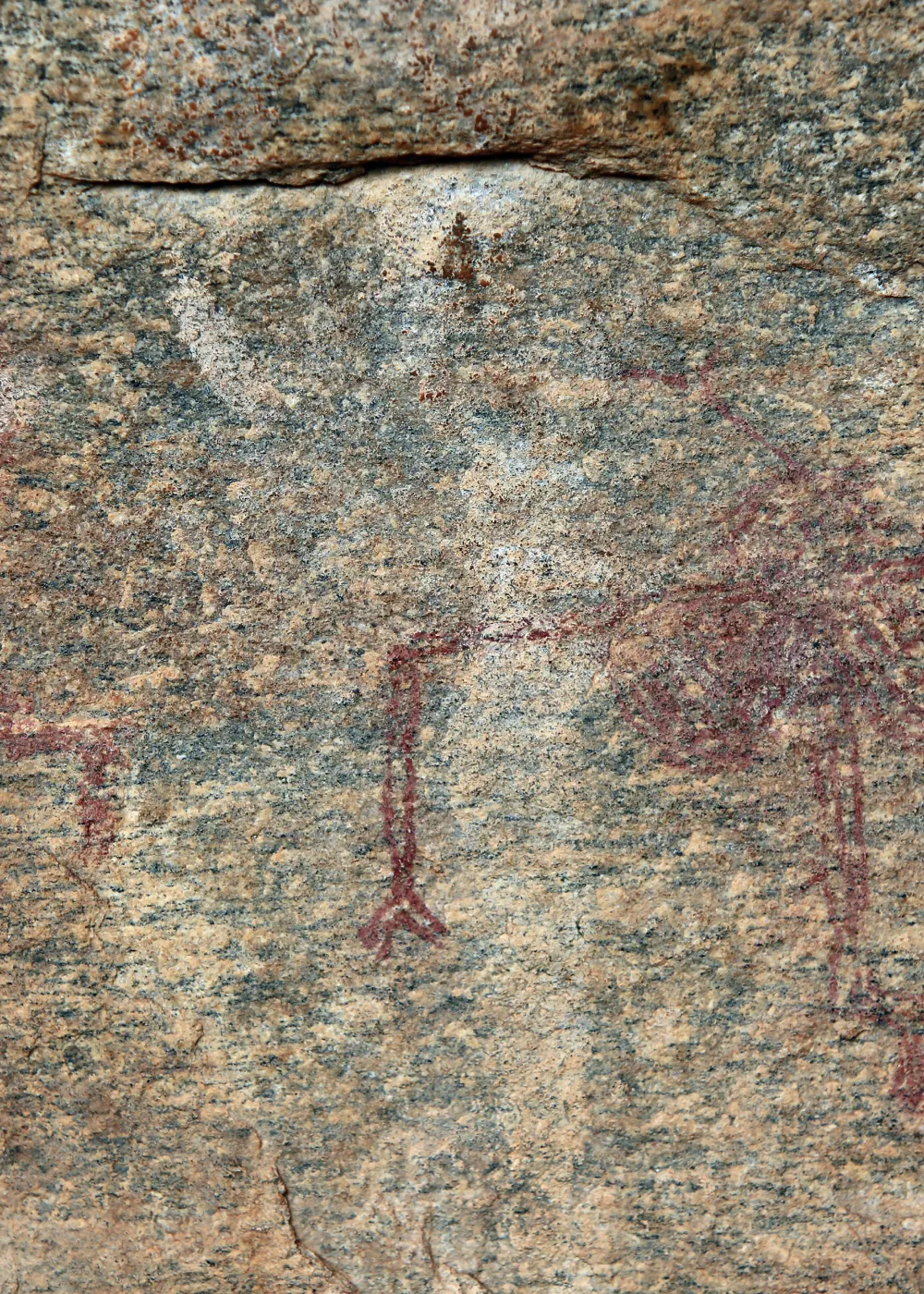
Rock shelters in the Marayoor hills of Idukki preserve early pictographs painted in red ochre and white kaolin. These depict animals, humans, and abstract motifs such as sambar deer with a calf at Manala, honeycomb patterns nearby, and wavy lined giant human forms with hand impressions at Ezhuthala (Pathipara). The variety of styles and superimpositions reflects evolving artistic techniques and symbolic expression, highlighting the region’s importance in early cultural life.
Kara Hotel fort Kochi
Norma - 60 x 80 cm
Kara Hotel fort Kochi
Mudrah II - 45 x 60 cm
Kara Hotel fort Kochi
Norma - 60 x 80 cm
Kara Hotel fort Kochi
Mudrah II - 45 x 60 cm
Death - Megalith Gallery
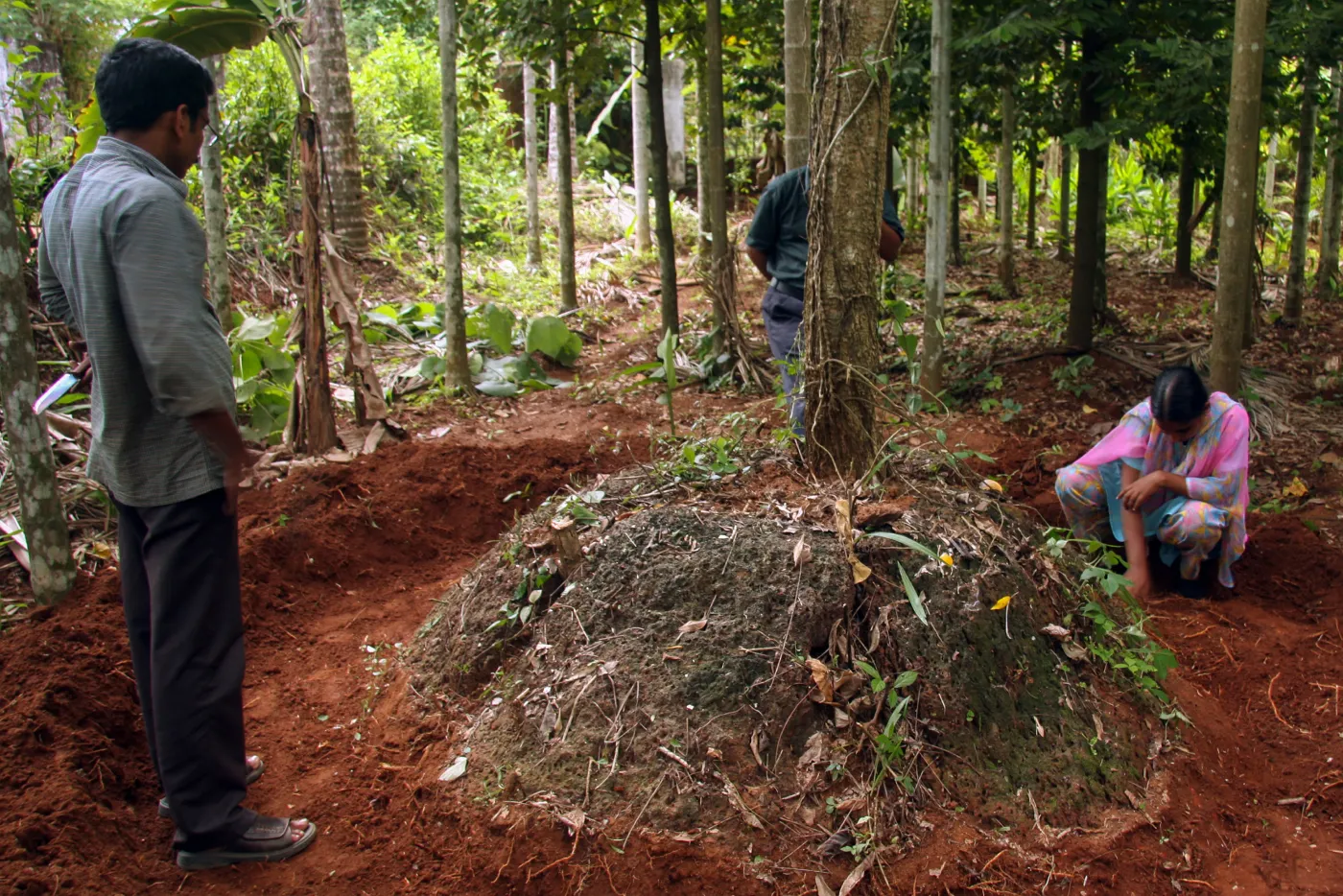
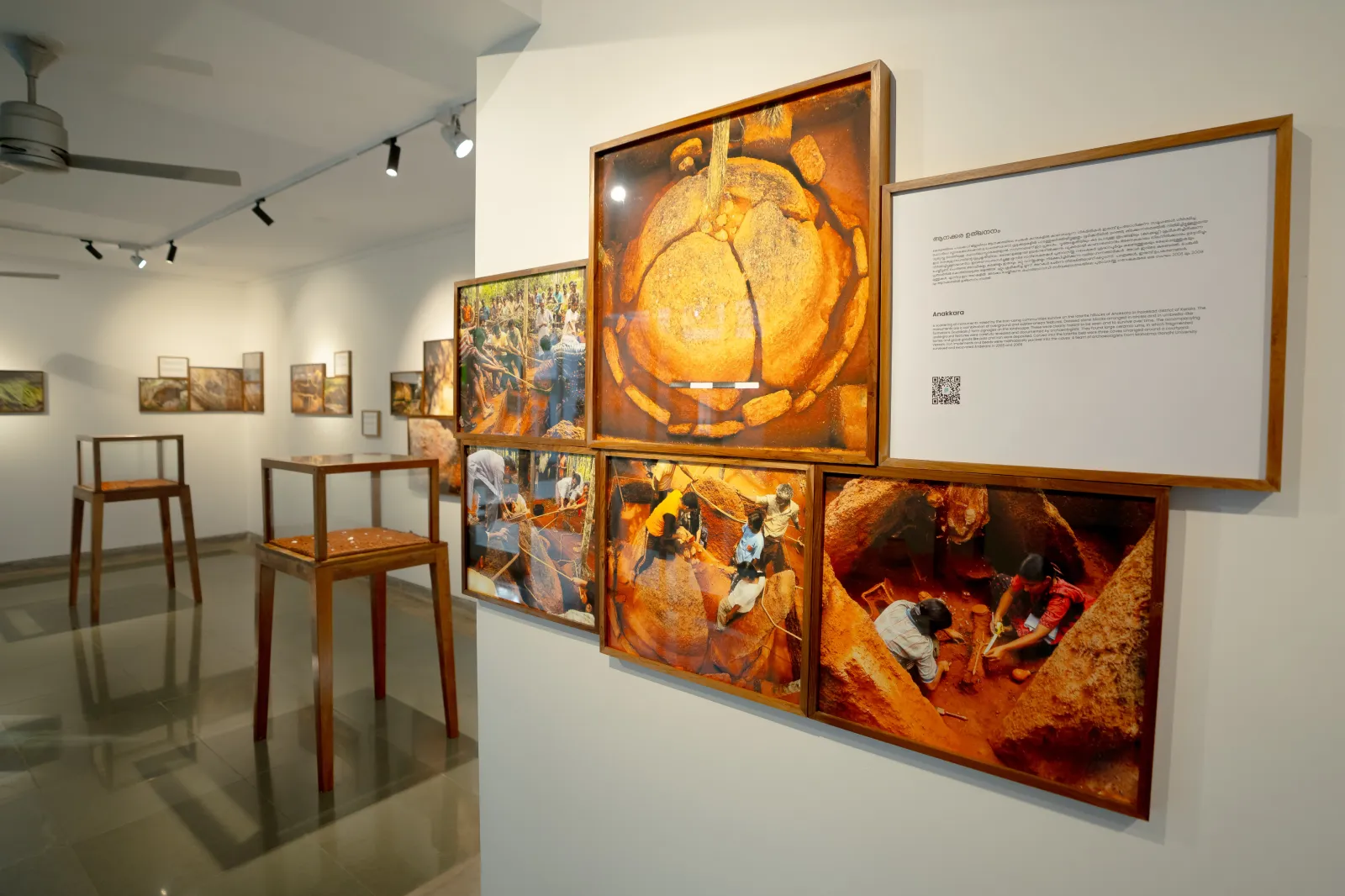
Mortuary archaeology, the branch of archaeology devoted to death and burial practices, invites us into these quiet, intimate rituals of the past. Among its most striking expressions are Megalithic monuments.

“Megalith” encompasses a wide range of burial practices from the Iron Age to the Early Historic period (c. 1000 BCE to 500 CE), from imposing stone structures to simple earthen pits. Together, they form a constellation of memory, identity, and belief.

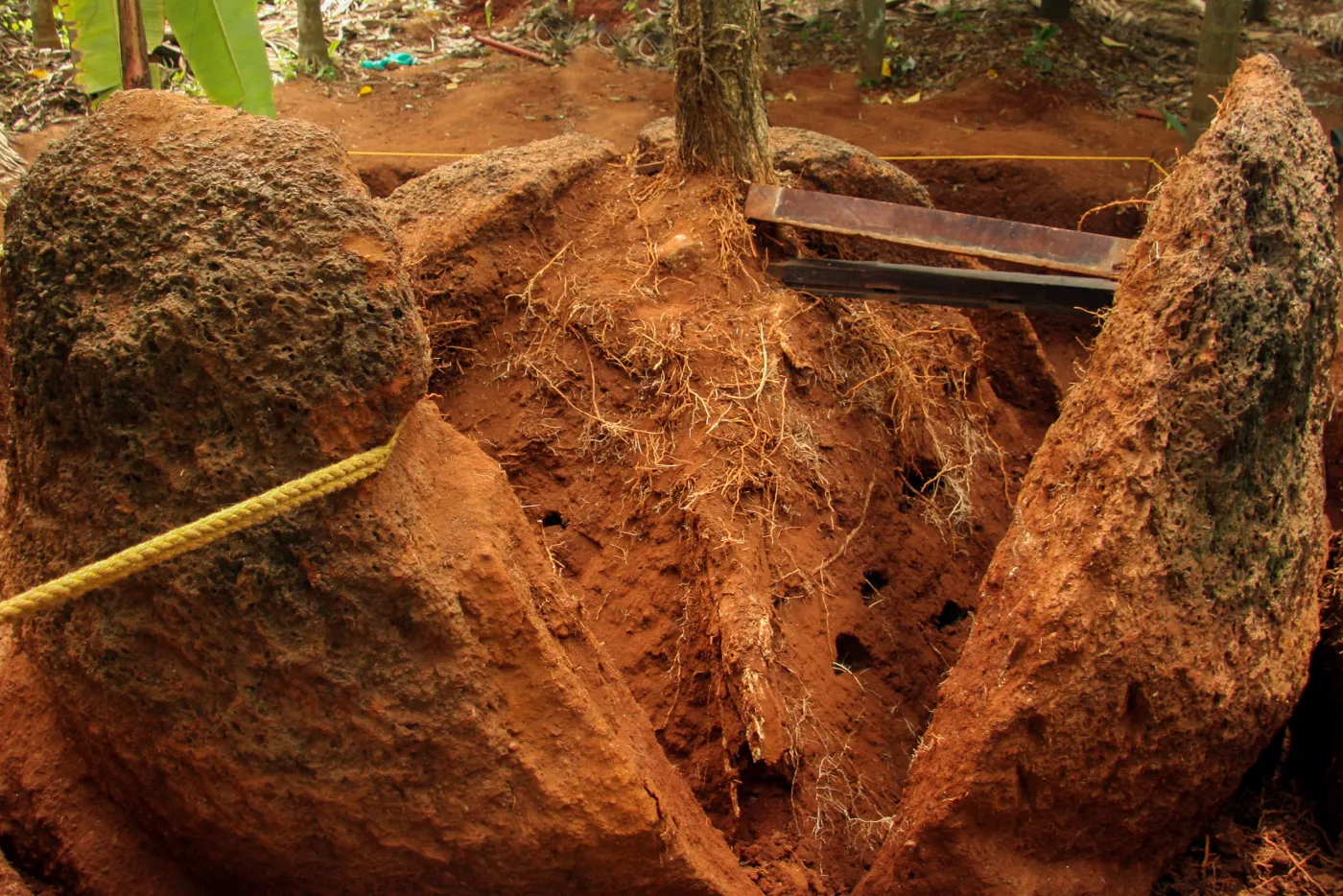
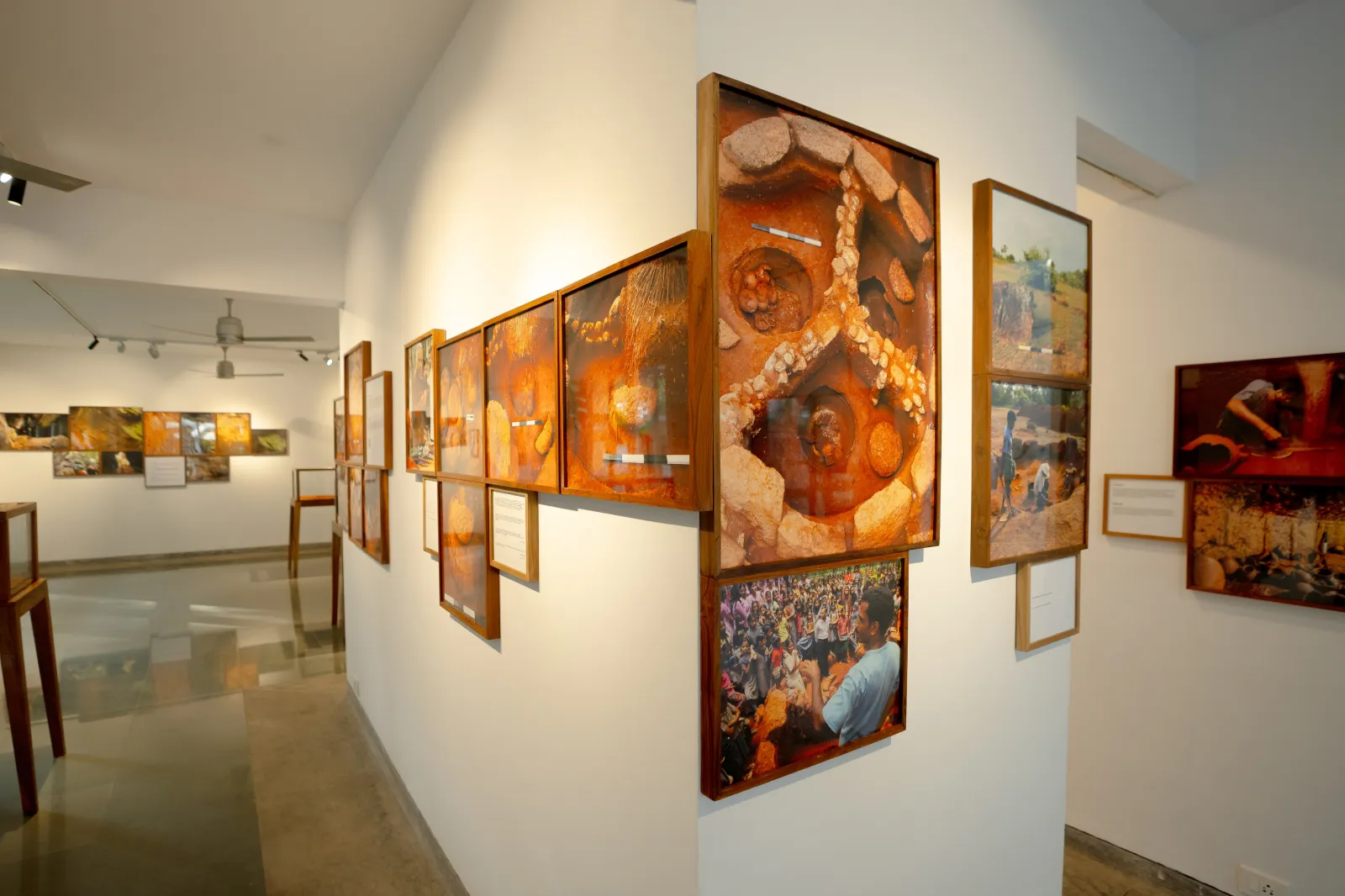
In this gallery, you will encounter cists, dolmens, menhirs, rock cut tombs, umbrella stones, and stone circles. Some sheltered the remains of ancestors, others were raised in commemoration. These monuments reveal how early communities transformed loss into lasting landscapes of memory.
Typology:
Here’s a systematic classification of artifacts and features you’ll find on display.
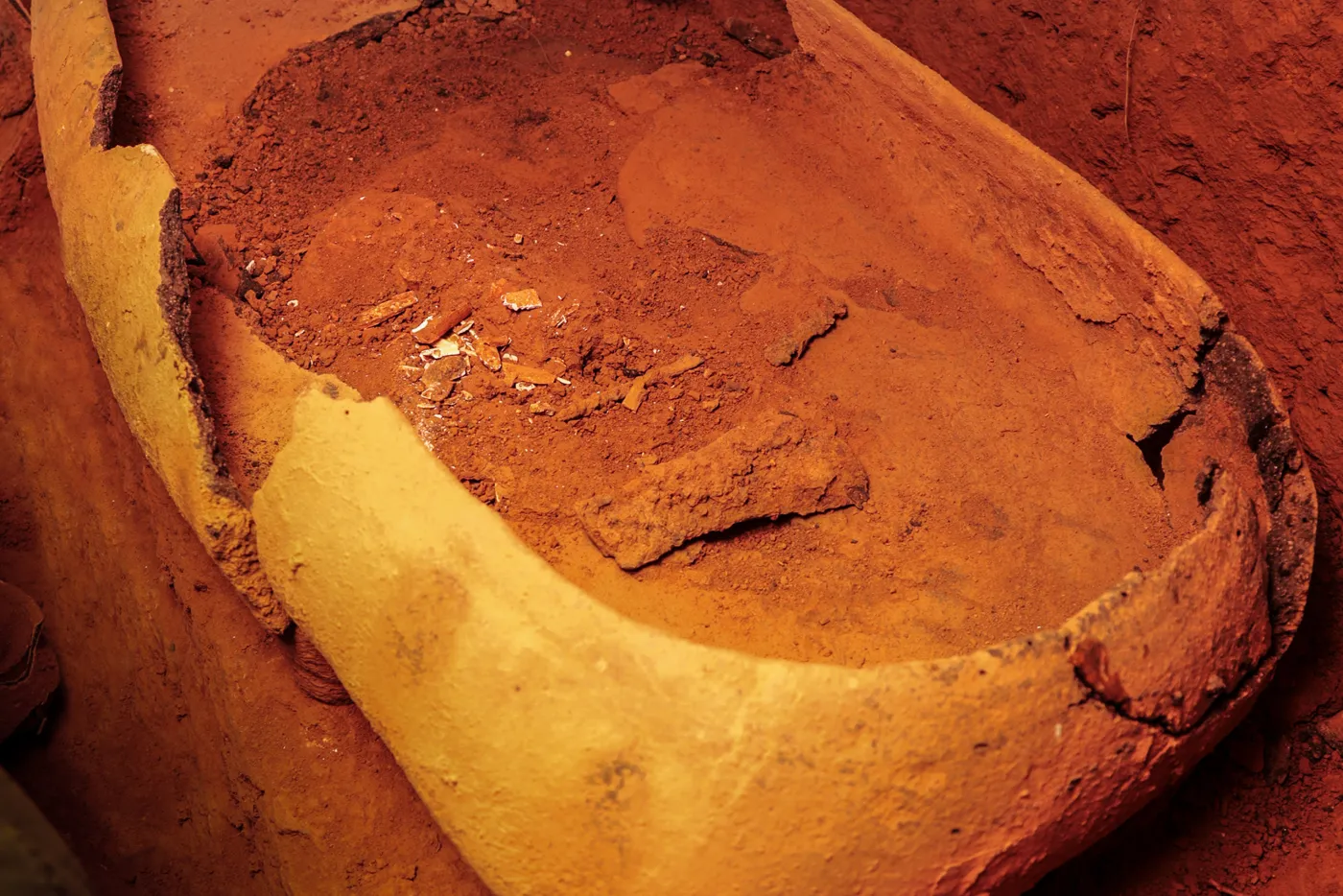
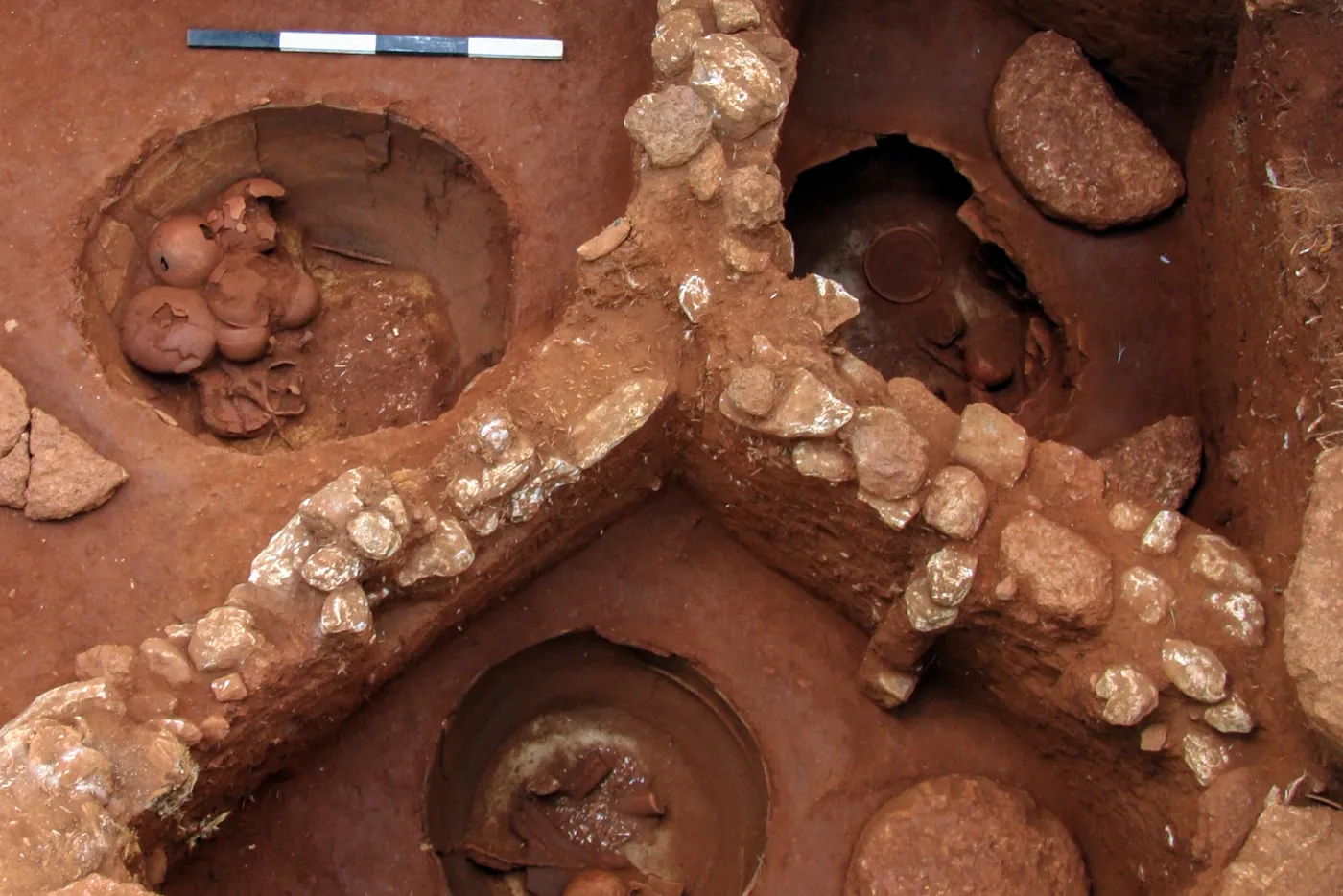
Pit / Urn burial
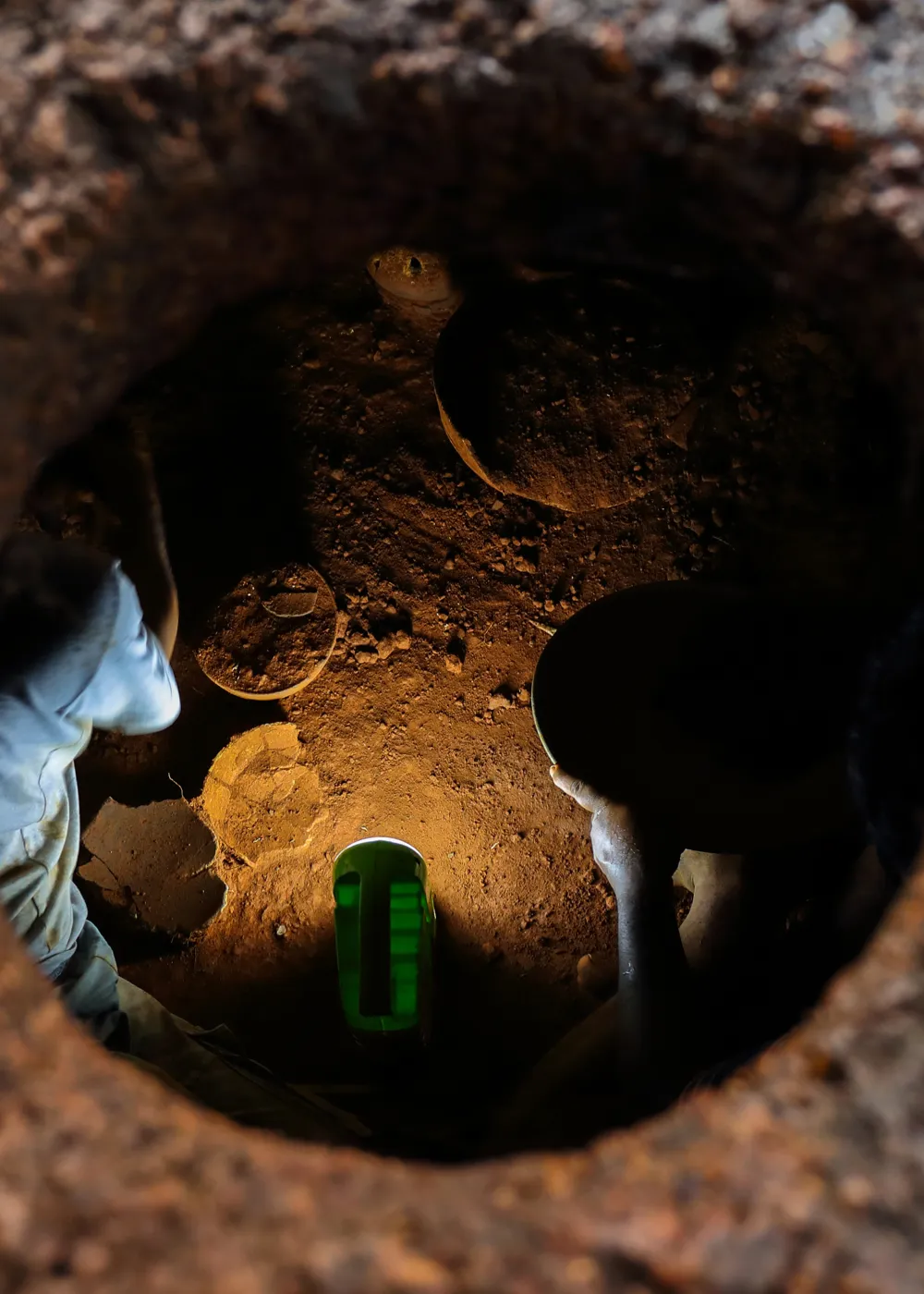
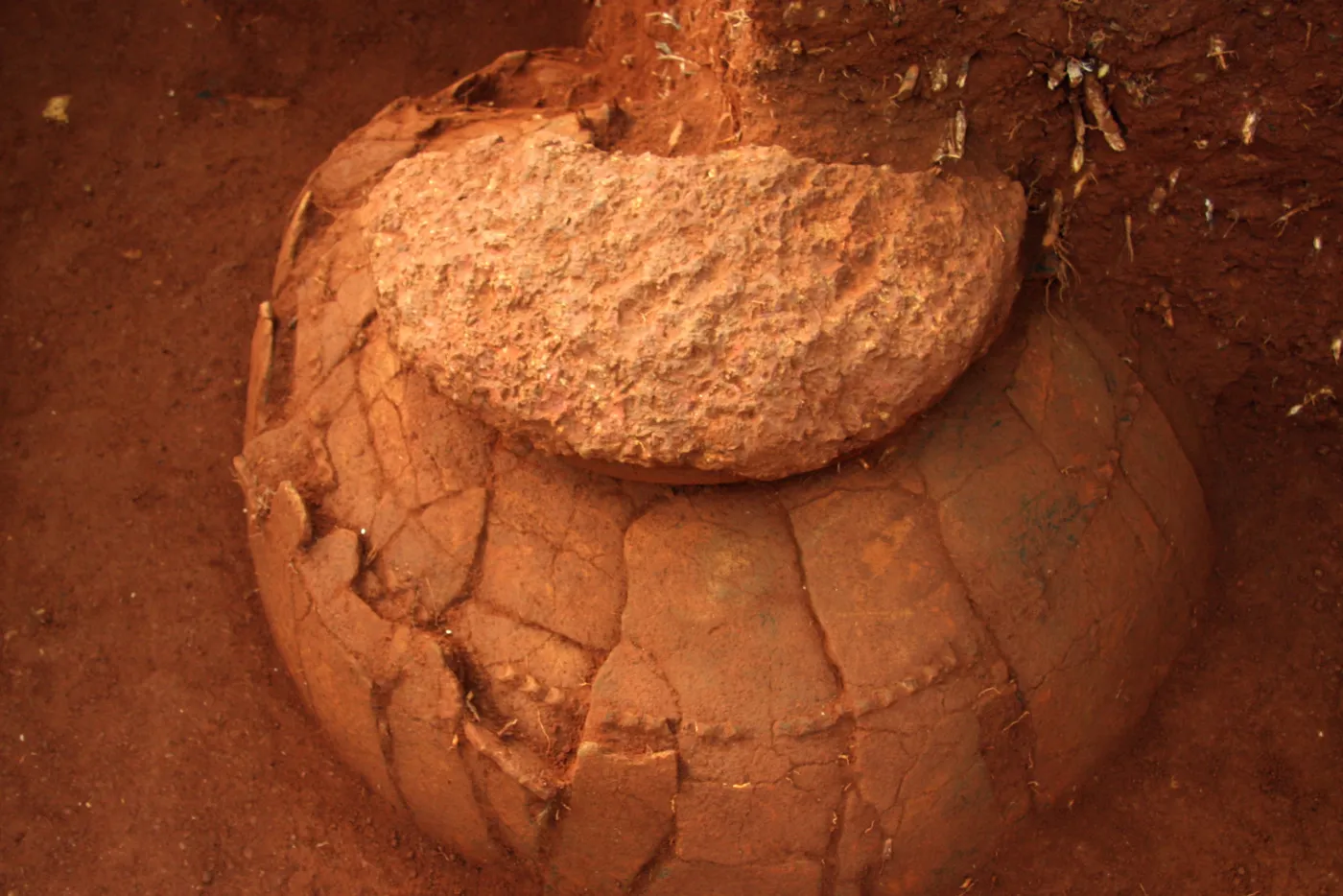
This burial type features an urn placed in a pit, usually covered with a terracotta lid and often sealed with a granite or laterite capstone. Grave goods such as beads, iron objects, pottery, or bone fragments may be placed inside the urn or around it. In some cases, the urns are found without any accompanying offerings.
Circle
This burial type is marked on the surface by a stone circle made of roughly cut or undressed stones. These stones form a circular boundary around the burial pit.
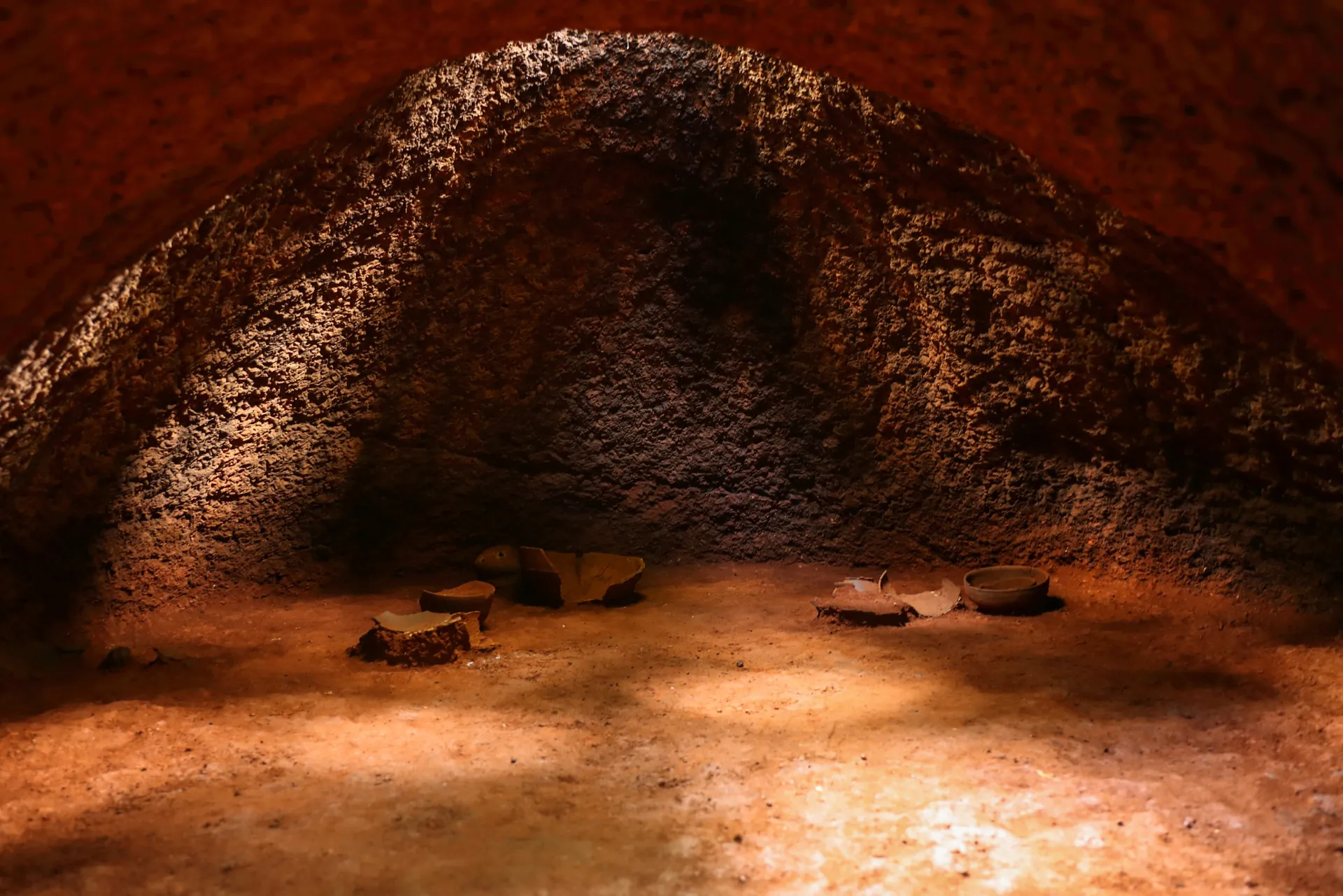
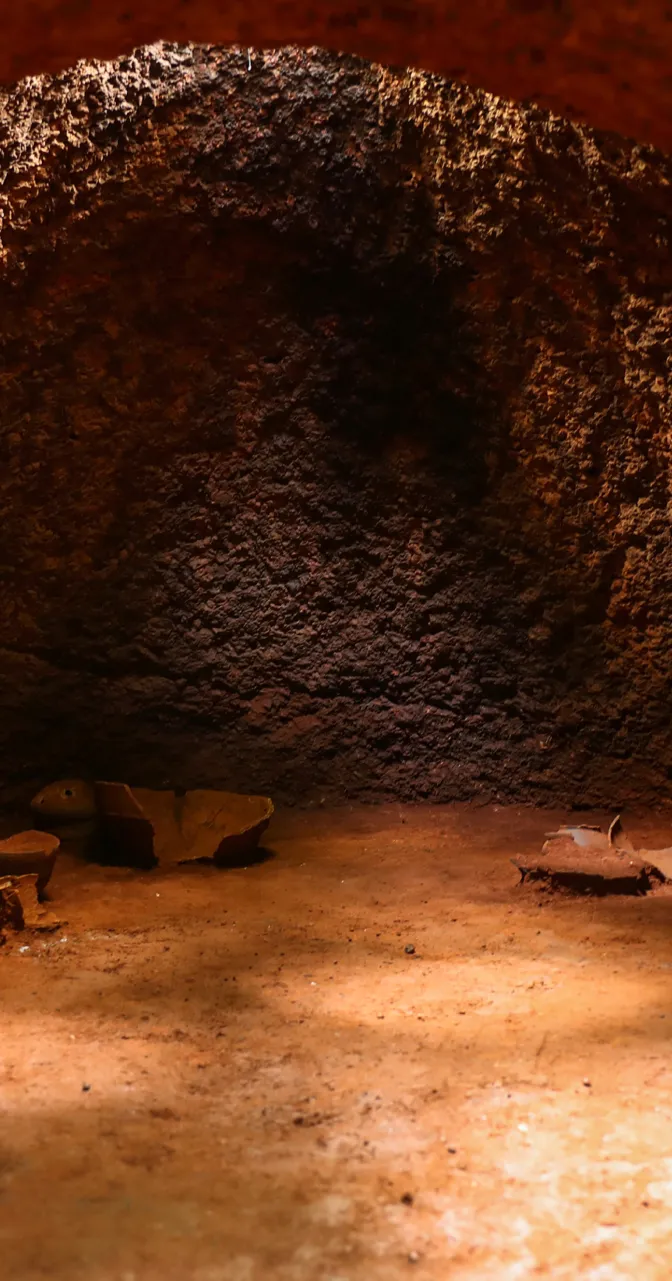
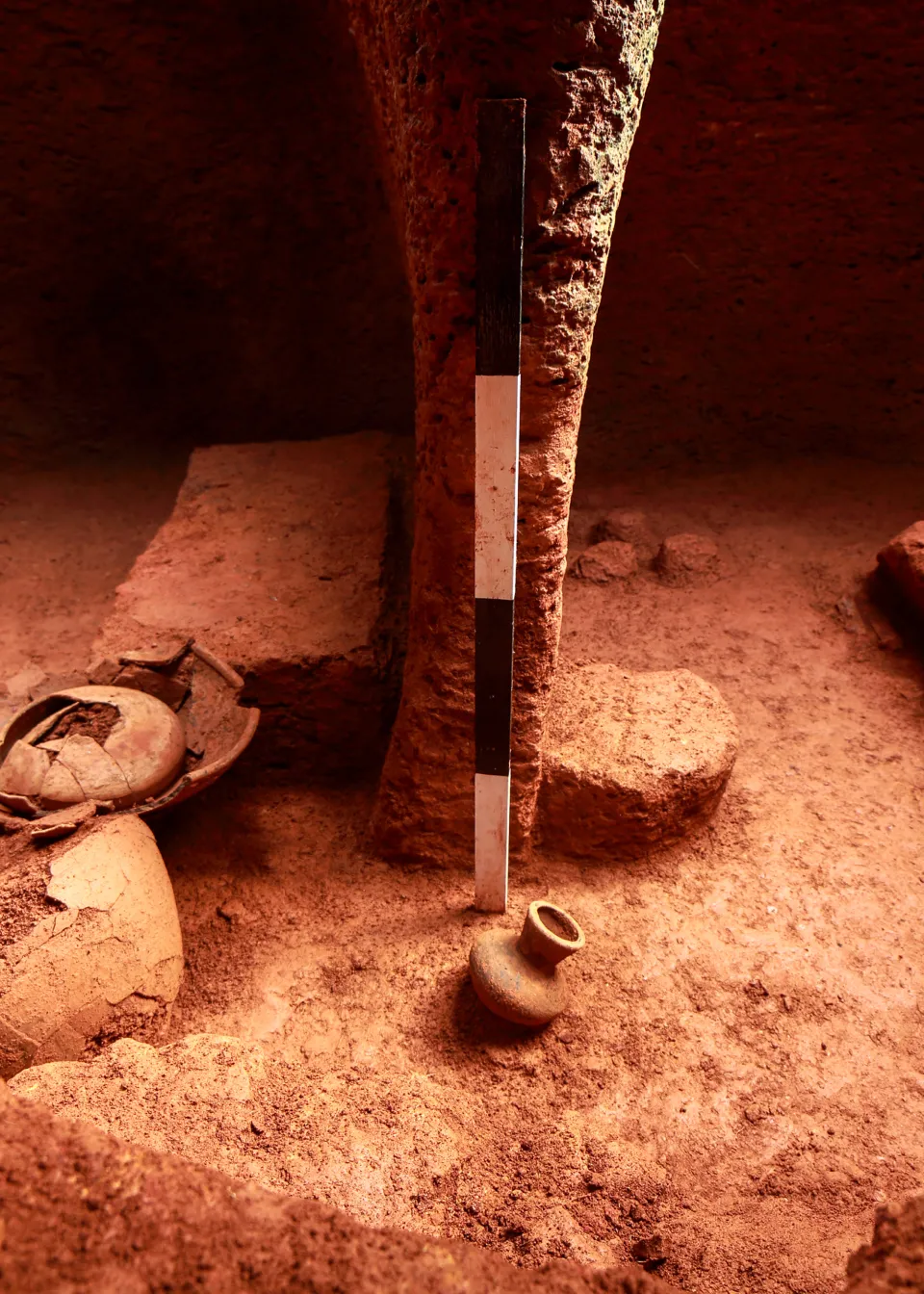
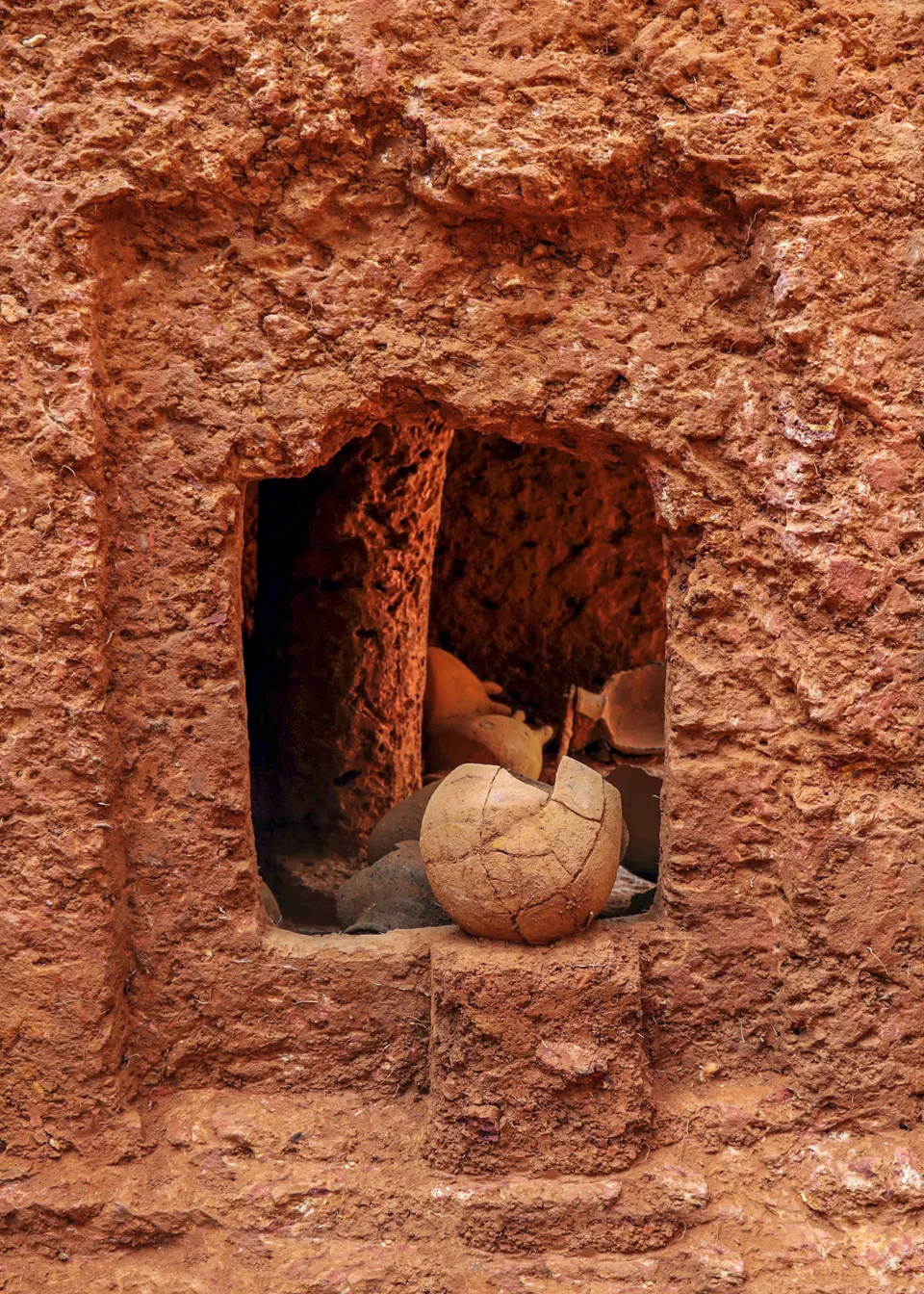
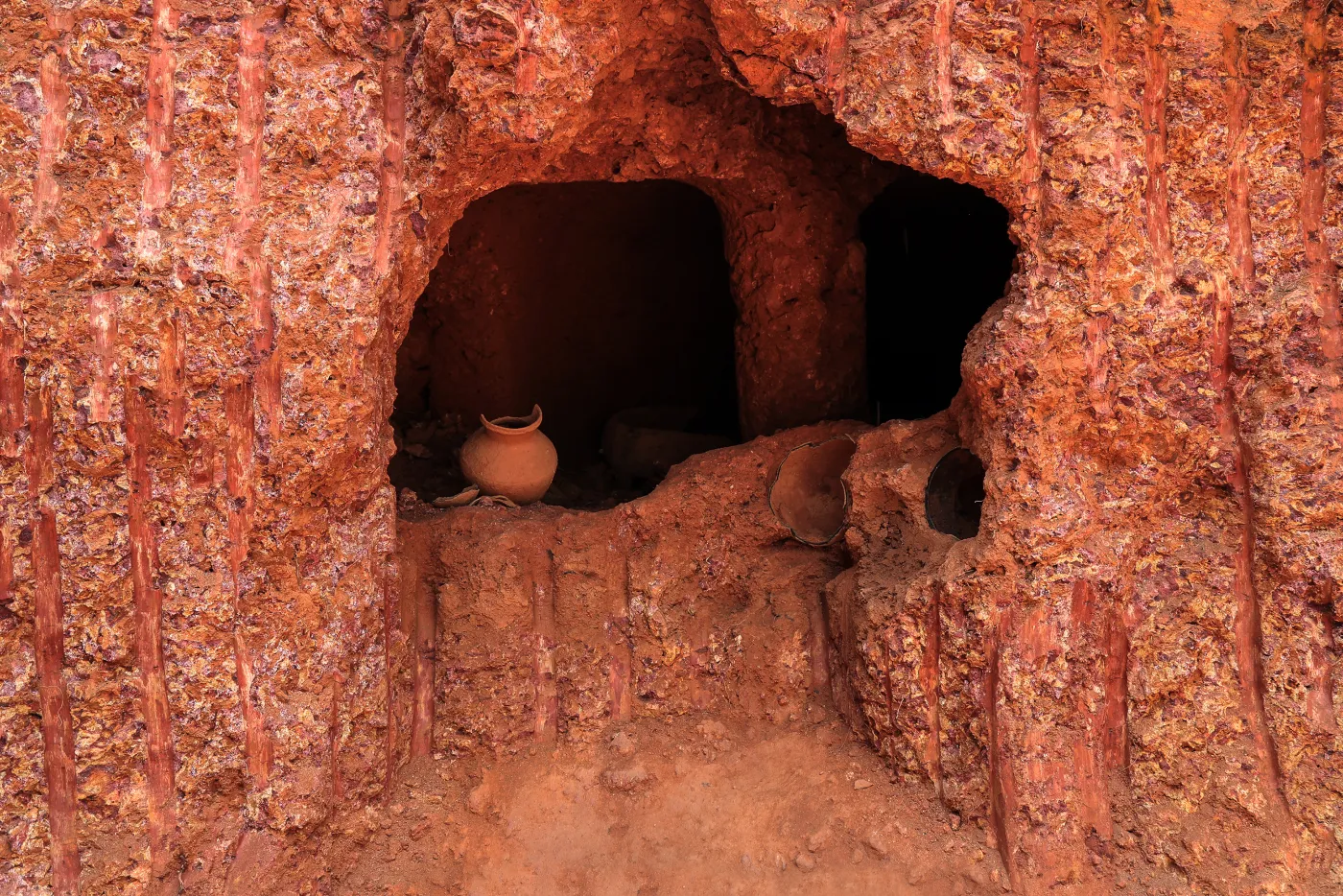
Rock cut tomb
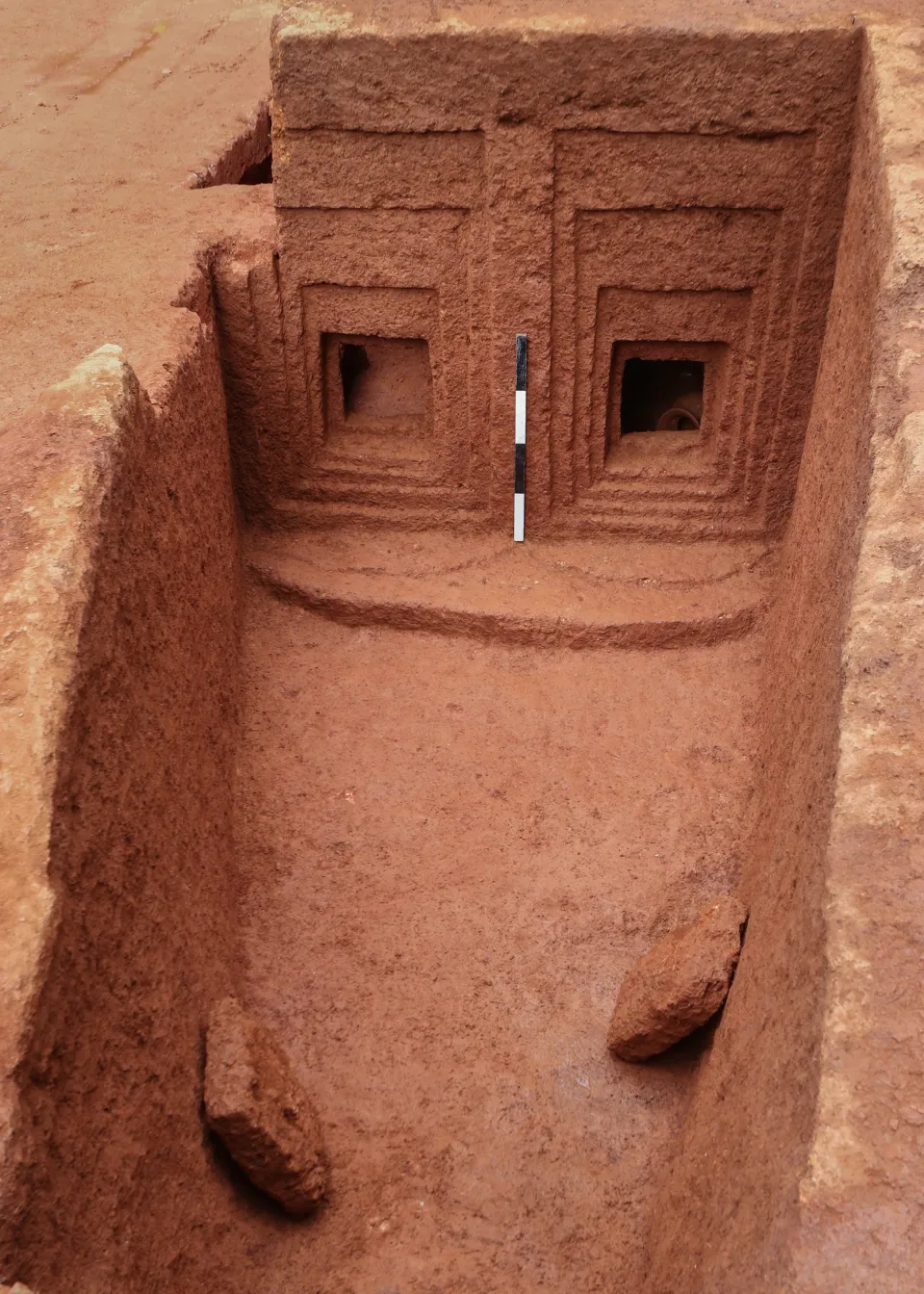
These burial structures are rock cut chambers carved into solid laterite at varying depths. They typically feature an open courtyard with steps leading down to an adjoining chamber. Inside, benches carved from the bedrock are often present, though some caves lack them. In certain examples, pillars cut from the living rock stand within the chamber, highlighting the architectural sophistication of these underground spaces.
Kudakkal
This monument type features four quadrantal clinostats supporting a hemispherical capstone, forming a balanced, mushroom like structure known as kudakkals. These monuments are found exclusively in Kerala and represent a distinctive element of the region’s Megalithic tradition. Although most are carved entirely from laterite, a notable example at Pattarkulam in Malappuram combines a granite capstone with laterite supports, demonstrating regional variation in material and craftsmanship.
Dolmen
A dolmen is formed by three or four upright stone slabs supporting a horizontal capstone. The vertical slabs, or orthostats, are set so that one edge meets the adjoining wall while the other projects outward. The chamber is typically enclosed with roughly dressed granite slabs that overlap the uprights. Dolmens built above ground are often found on rocky terrain, where their monumental form stands out prominently in the landscape.
Cist
A cist shares the basic architectural features of a dolmen but differs in its placement. While dolmens stand above ground, cists are built below the surface, with only the capstone visible from above.
Menhir
Menhirs are tall, monolithic stone slabs erected vertically above the ground. They are typically found without subsurface relics, indicating that they often functioned as markers or commemorative monuments.
Trade - Pattanam Gallery
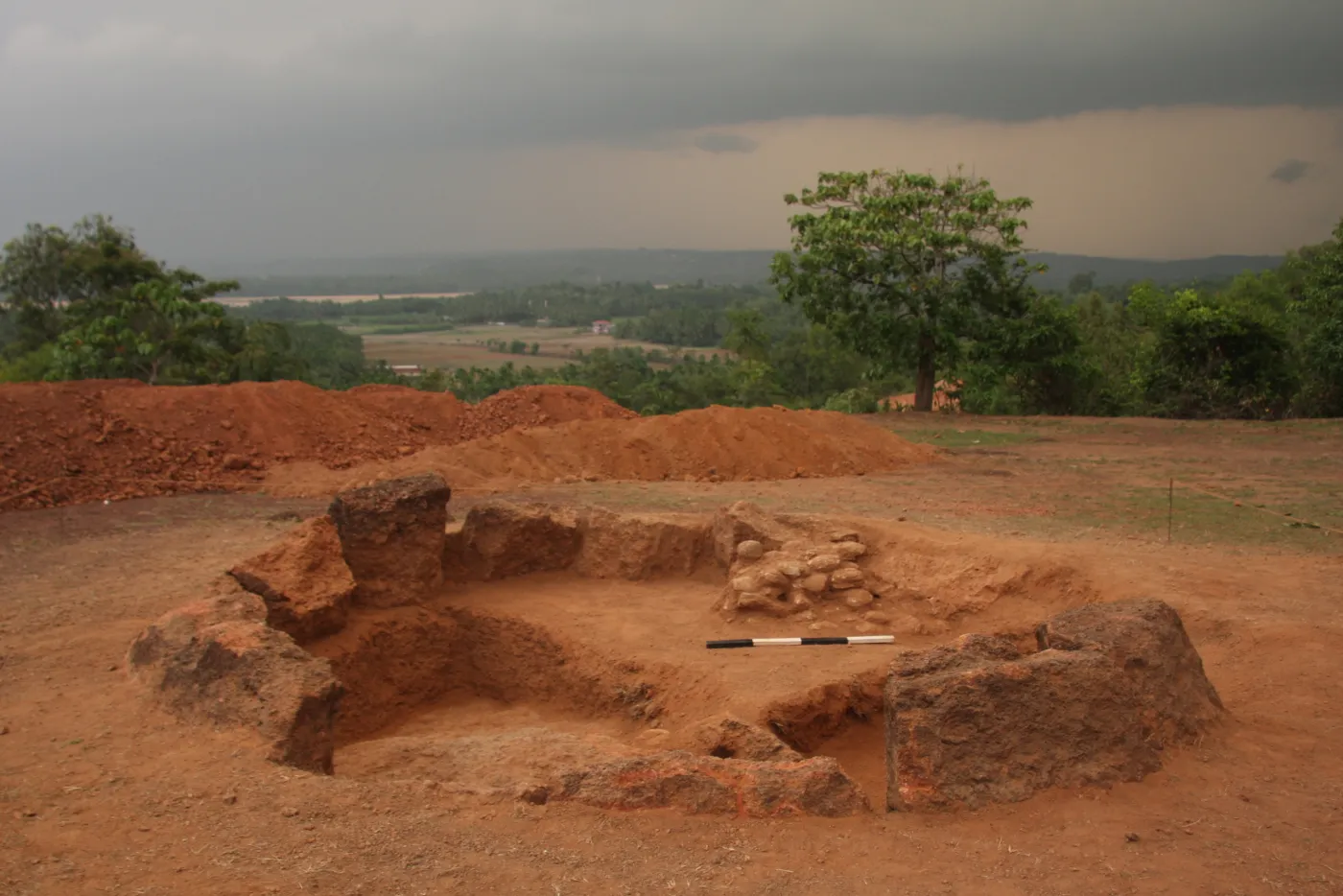
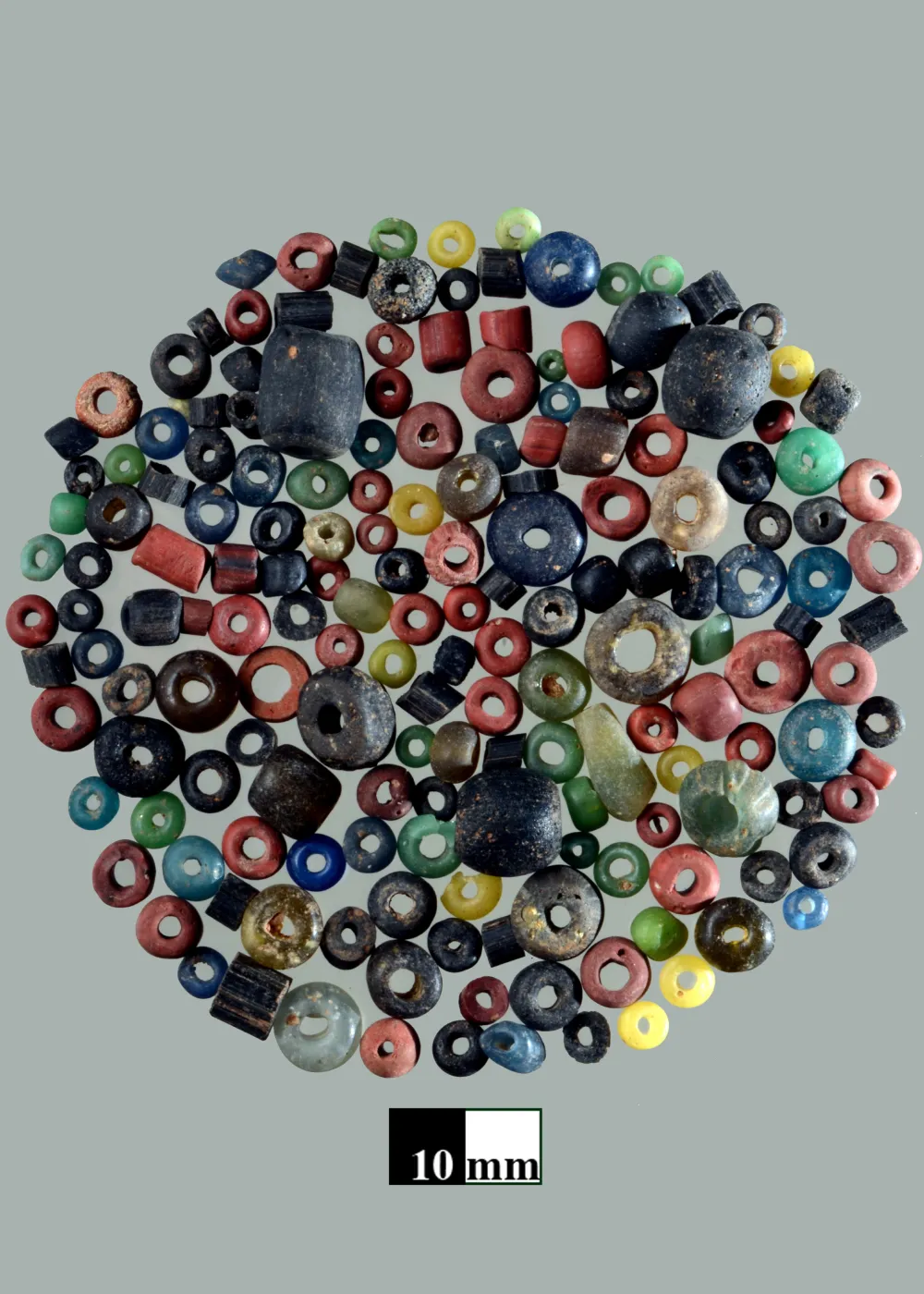
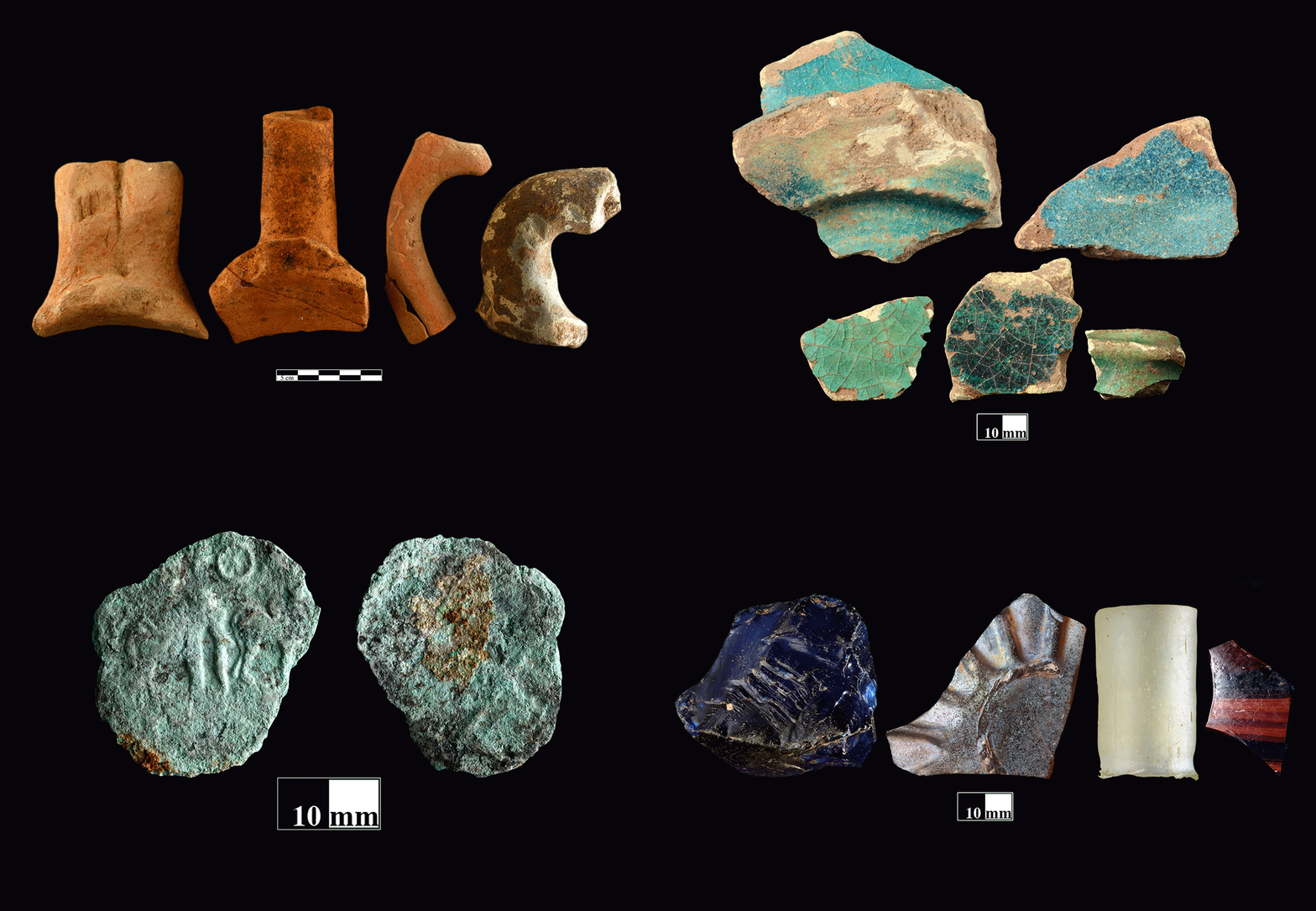
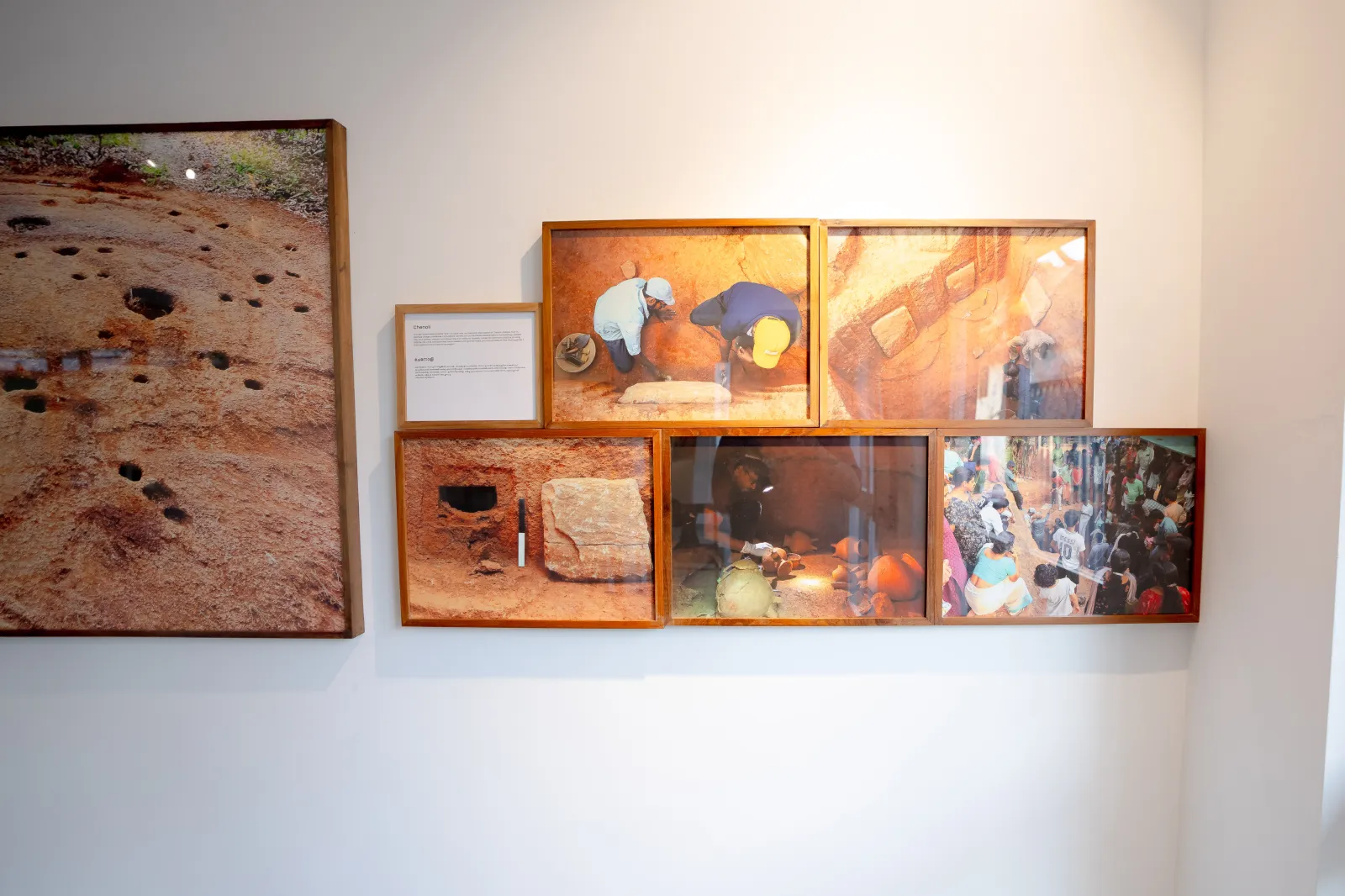
Pattanam speaks of ancient connections across land and water. An active node in the Indian Ocean trade over 2000 years ago, its archaeology sheds light on both the region’s past and its far reaching maritime and terrestrial exchanges.
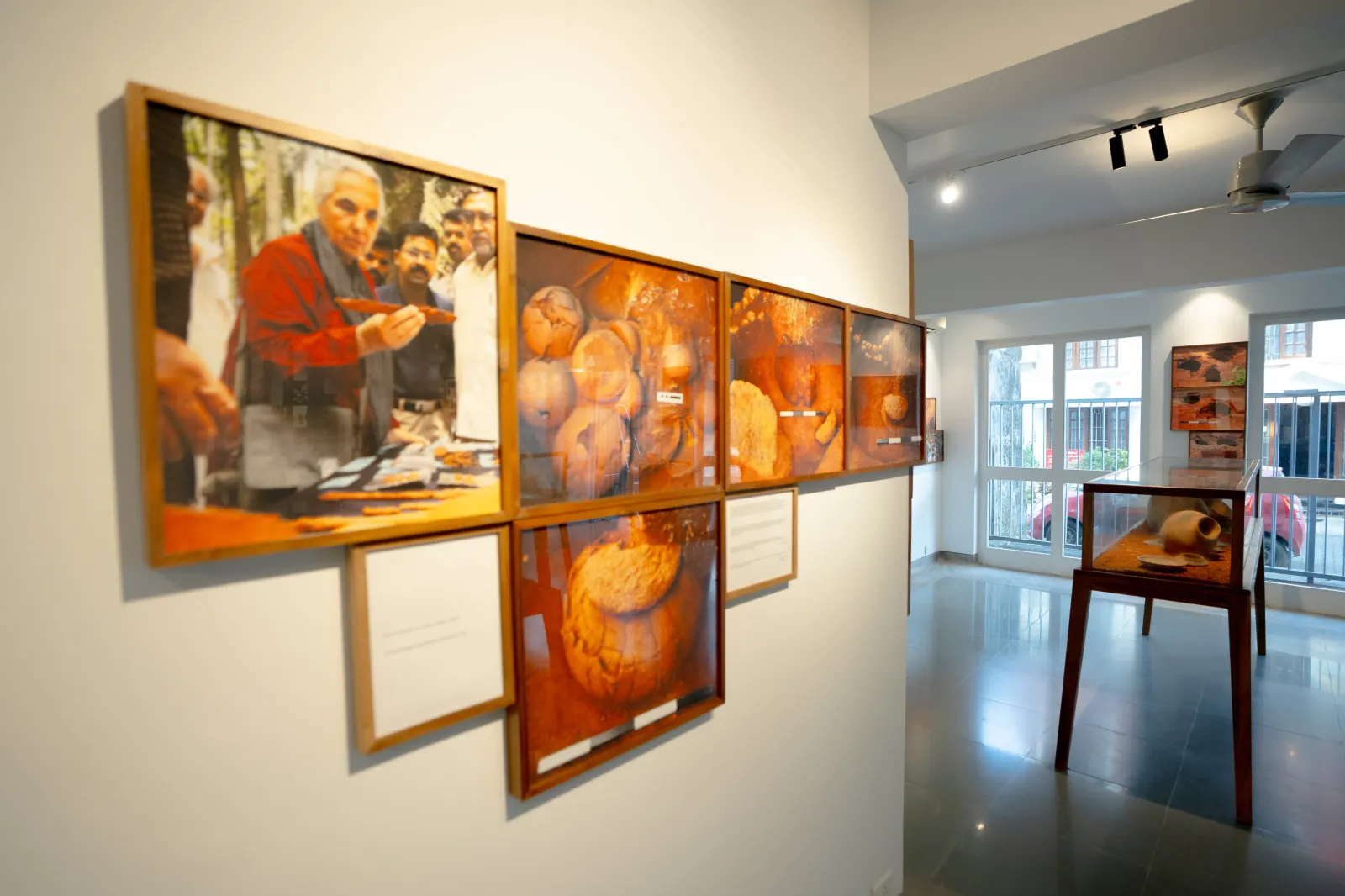
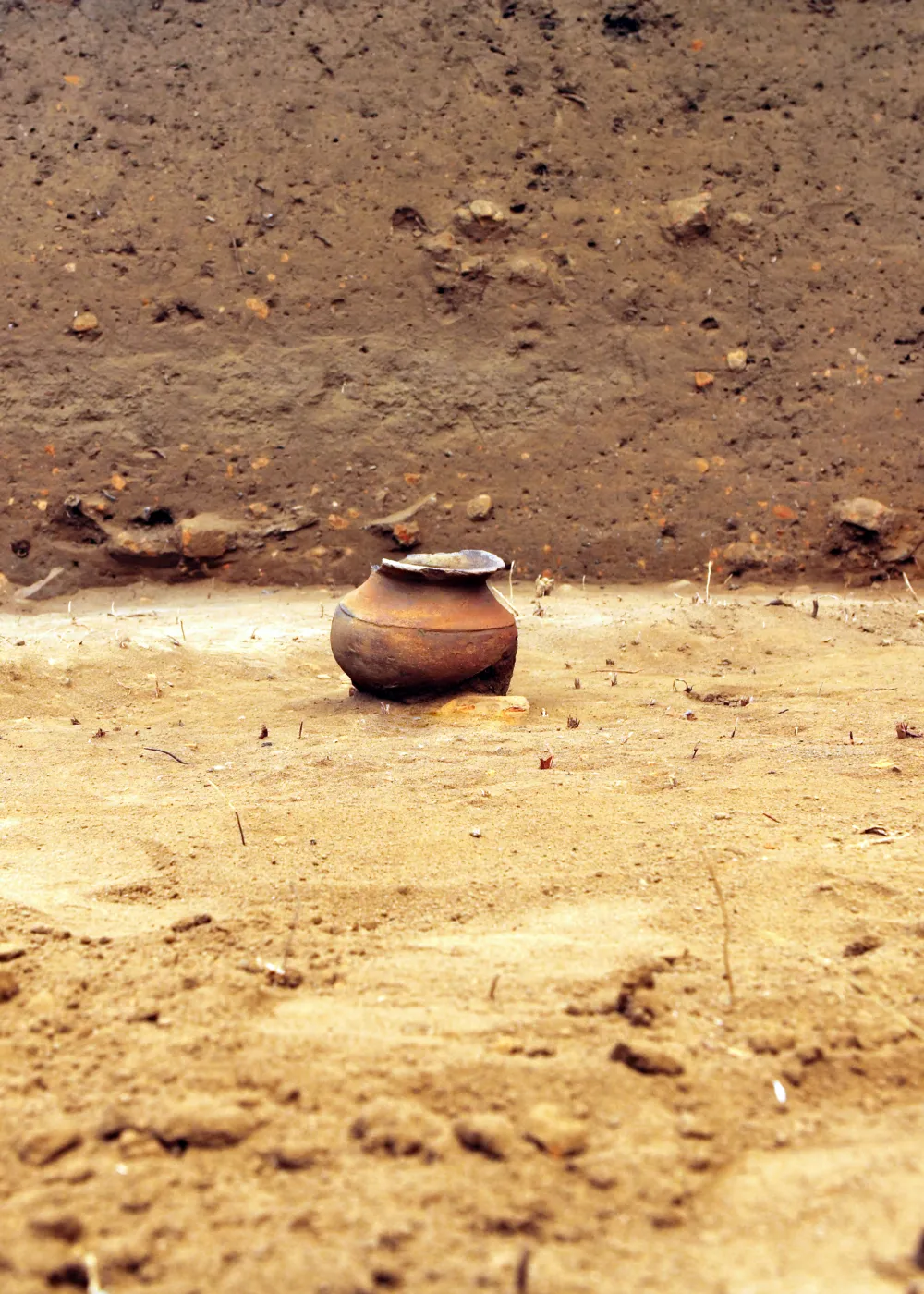
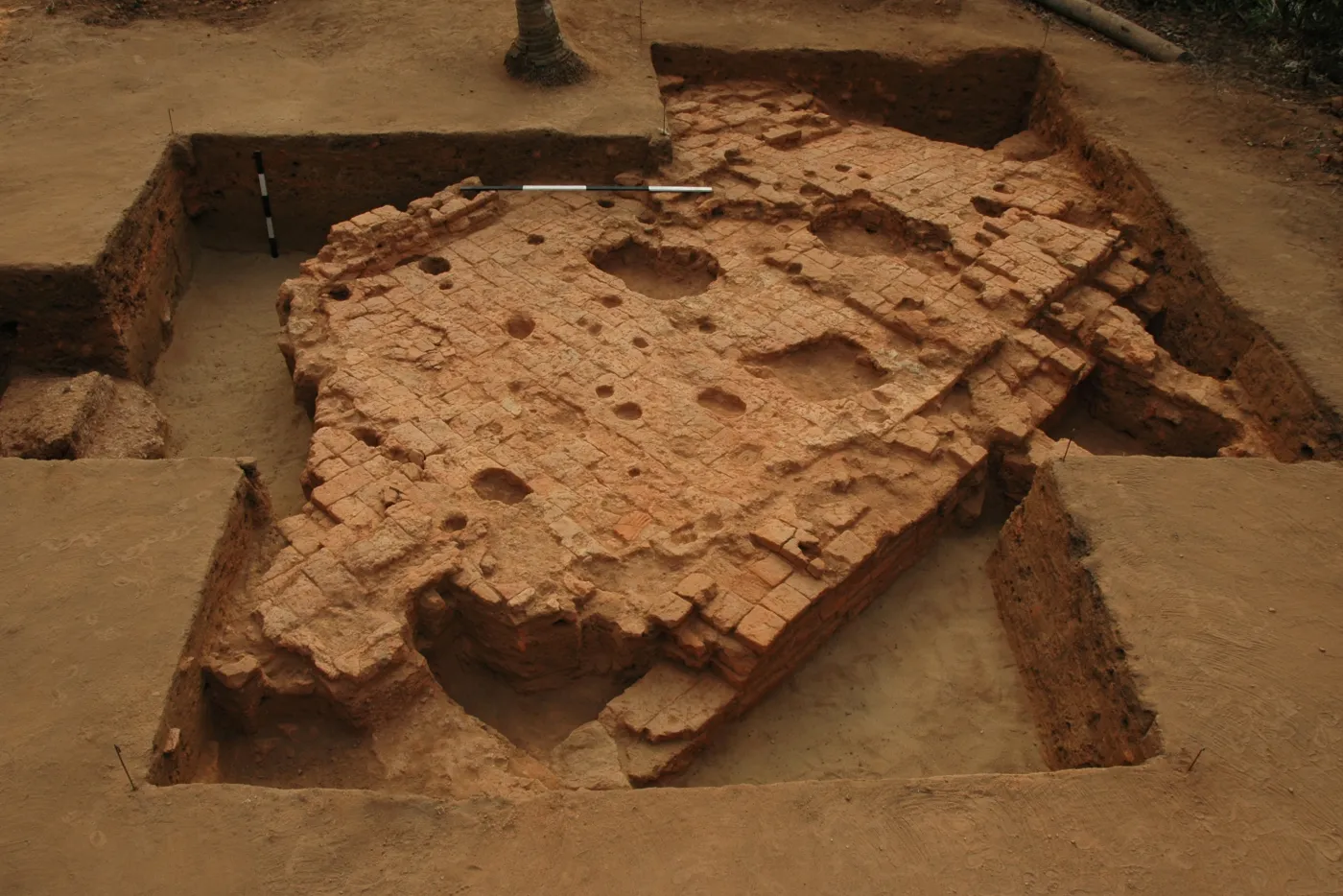
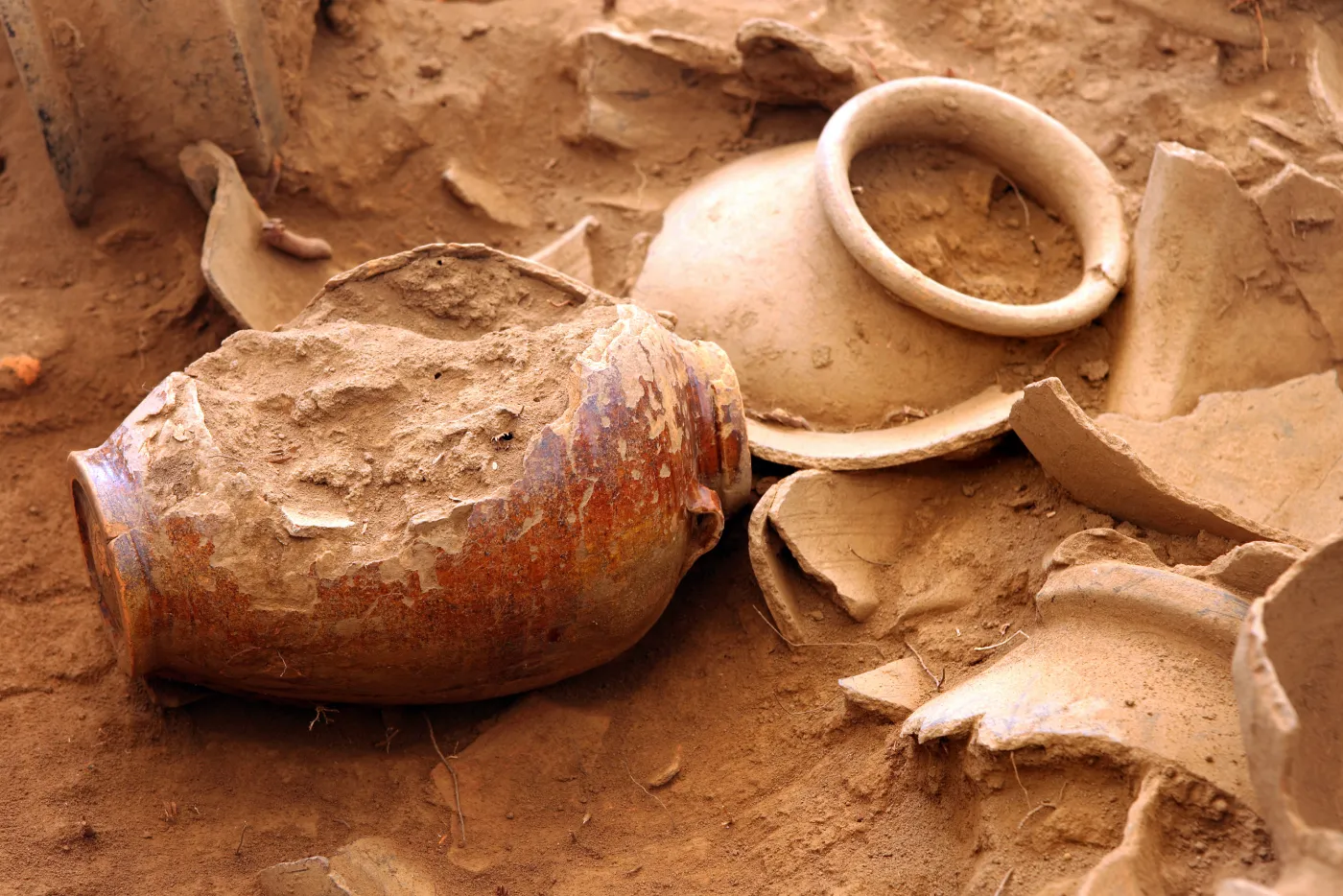
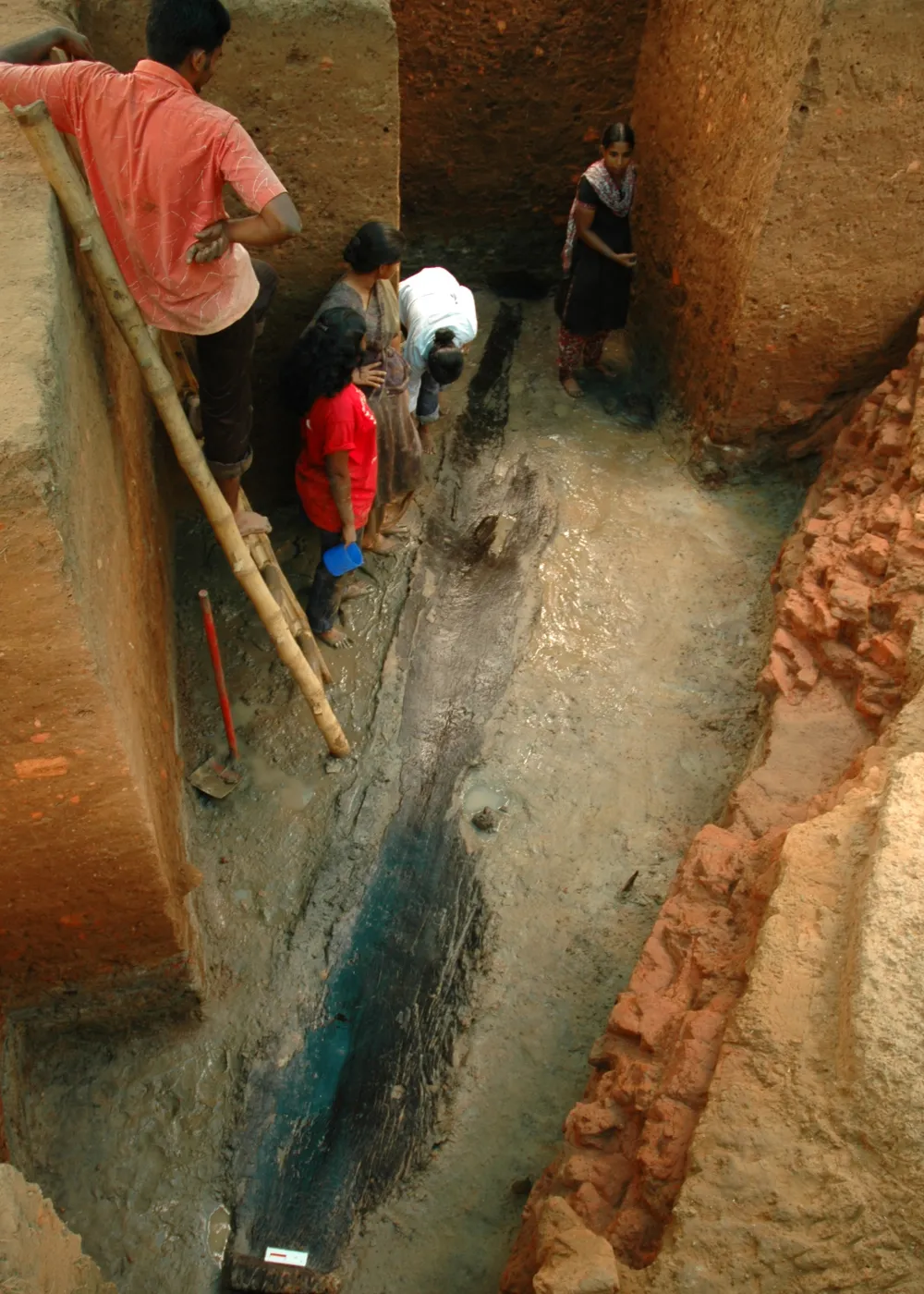
Archaeologists have unearthed remains of brick structures, storage, sanitation and water transport facilities, along with objects of everyday and specialized use from the site. Every shard, shape and fragment tells a story. An unfinished carnelian bead connects to lapidarists and traders. A sherd of amphora leads to the Mediterranean and the import of liquids such as wine and oil in ships. The remains of a log boat buried under layers of soil show how landscapes are transformed over time and shape histories.
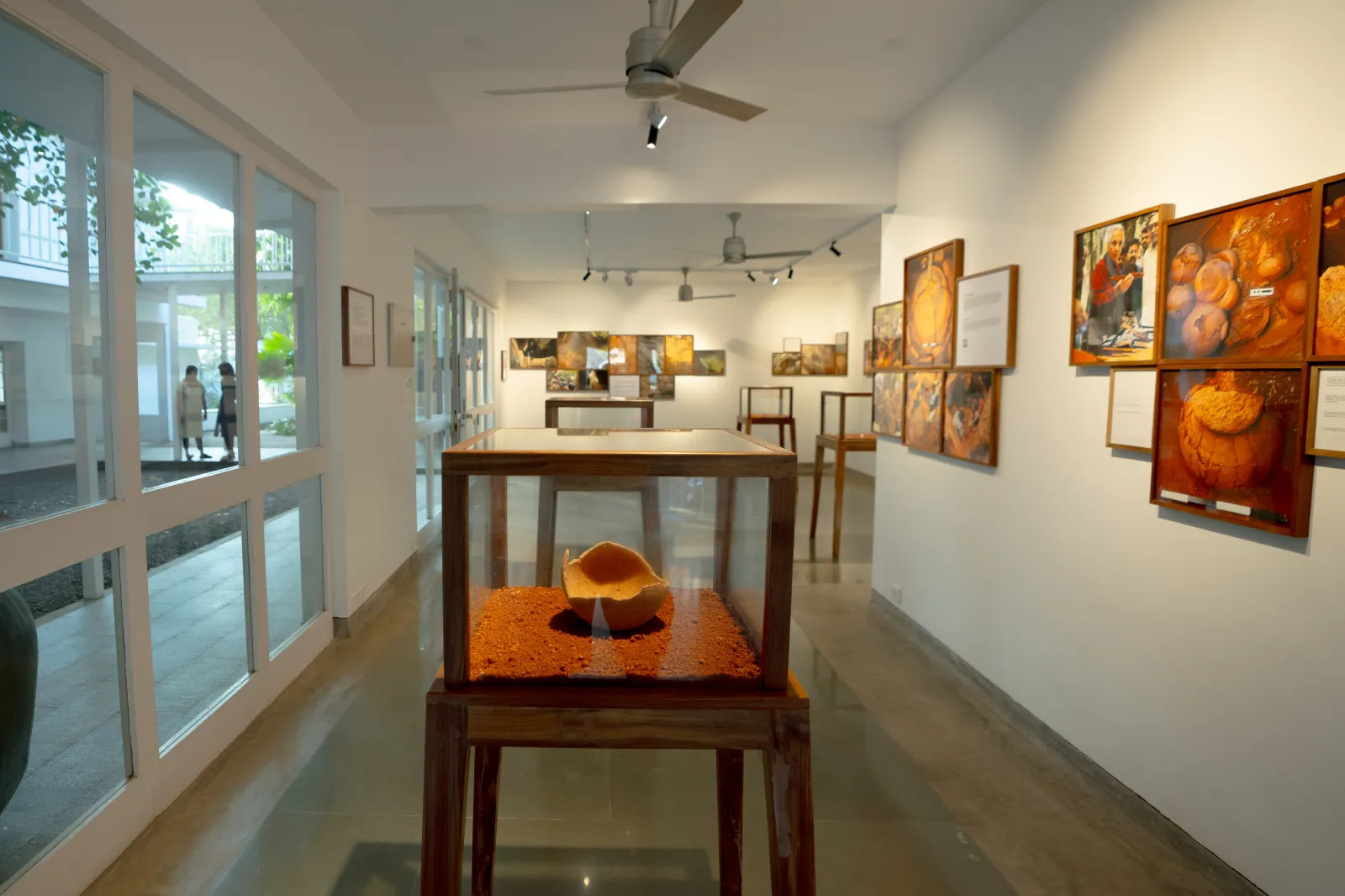
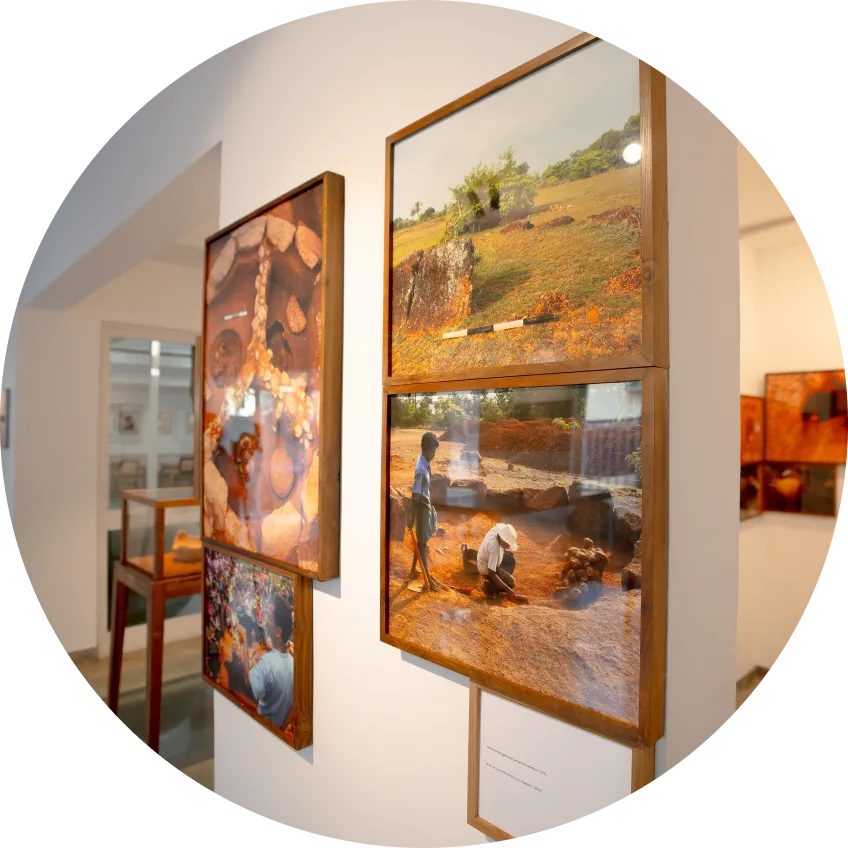
Between 2007 and 2015, the Kerala Council for Historical Research excavated multiple areas at Pattanam.
Kara Hotel fort Kochi
Bromo - 80 x 60 cm
Kara Hotel fort Kochi
Caldera - 120 x 90 cm
Kara Hotel fort Kochi
Zainatul - 45 x 60 cm
Kara Hotel fort Kochi
Batik - 60 x 80 cm
Meet the artist
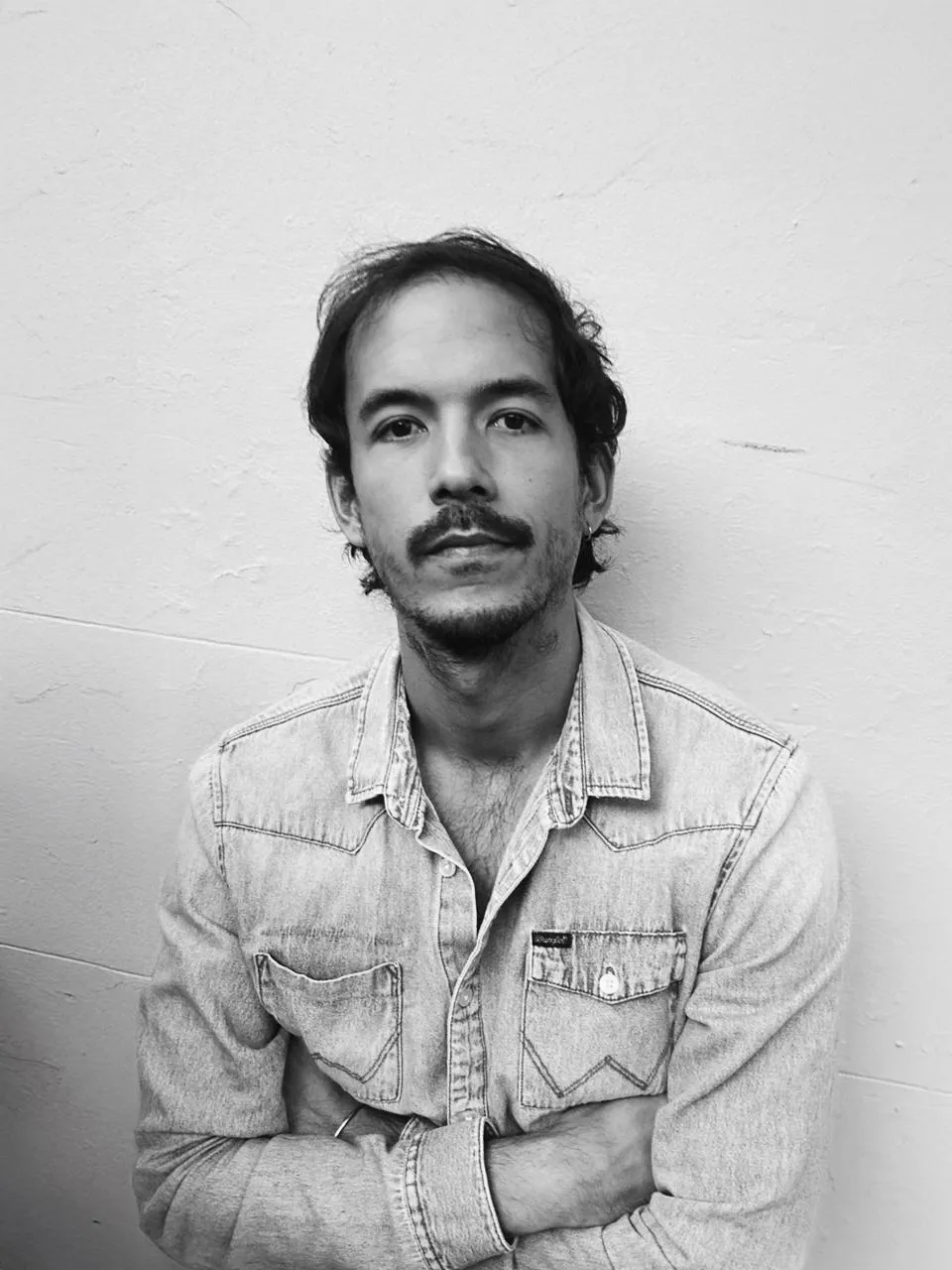
Mohamed A, a Fine Arts graduate from Thiruvananthapuram, Kerala, has dedicated himself for over two decades to photography. He was awarded the esteemed Junior Fellowship for Photography by the Ministry of Culture, Government of India, for 2002–2004, which enabled him to realize his creative ambitions.

His photographic works stand out for their thematic richness, brilliantly conveying meaningful subjects through a masterful blend of light and color. His portfolio includes capturing the beauty of nature alongside the diverse lifestyles, cultures, and traditions of various communities. Mohamed has advanced his expertise by visually documenting archival and archaeological materials, broadening his creative and professional horizons.

In addition to curating numerous photography exhibitions, he has also contributed cinematography to several acclaimed short films and documentaries, earning recognition for his work. A significant milestone in his artistic journey came in 2018 with his cinematography debut in the Malayalam feature movie, Udalazham, which garnered screenings at national and international film festivals. Since then, he has worked on five more feature films, continuously exploring the nuances of his art form to expand his artistic vision.
In conversation with the artist
From painting to archaeology photography – that’s quite a transition. What led to the shift?
As a beginner, when I just started out on my journey as a painter-photographer, I was free to experiment with many genres of photography. But it was archaeology that finally claimed my full attention. In 2006, I started using the camera to create photographic records for Dr. V. Selvakumar’s studies on megaliths, and soon realised how vital documentation is as proof, evidence, and a tool for interpretation, reference, and education. Archaeological photography thus became central to the visual documentation of the Pattanam excavations in Kerala.
As an artist, did the pursuit of archaeological photography change your dynamic with creative expression?
Although the work was considered largely scientific, as a member of the team I constantly tried to embed visual aesthetics into each frame so that the images would also stand on their own as compelling photographs. This is where the role of art in archaeological photography became clear to me, and I began to consciously compose with specific aesthetic elements and features to give my images a distinctive visual structure.
Do you see your photographs as a form of historic conservation?
Archaeological photography turned into a journey through time and space that unfolded the history of Kerala before my eyes. Each newly unearthed object opened up an entirely new dimension of time and space, like entering a magical world full of unexpected discoveries. Field experiences at Anakkara, Pattanam, Kottappuram, and later assignments with the Kerala Archaeology Department, KCHR, and various universities in Kerala expanded this journey and sharpened my practice. These encounters deepened both my technical skills and my sense of responsibility towards history and heritage.
How did you think of bringing something that is archival in nature into a gallery for artistic appreciation?
I approach archaeological photography as an art form and continue to dream of seeing excavation images placed within thoughtfully curated exhibitions. Without such spaces, these photographs risk remaining confined to the pages of academic publications as mere visual records. This is why I chose to narrate the early historic megalithic period of Kerala through a visual sequence. The presentation moves from the rock paintings and engravings of Edakkal, Thovari, and Marayoor, through the typology of megaliths, to the excavations at Pattanam, forming a chronological visual narrative. There is a clearly defined space and a clear message for the audience, inviting them into an event that treats excavation photography as serious art.
Art at Kara. Art and history are cozy comrades within the walls of Fort Kochi. Step into Kara, our contemporary art gallery that is part colonial, part new - age expressions.

Kara is more than just an art gallery. It is housed within an 8-room hotel that can be best described as an art hotel. The former headquarters of the Dutch East India Company, the art deco heritage wing is filled with iconic work by modern masters. And the modern, minimalist wing where the gallery resides, has artworks by renowned contemporary artists from Kerala.

Connoisseurs of art can begin at the gallery and stroll through the café, common spaces and living areas of Kara to discover their favourites. Each room also comes with a masterpiece.

Come visit our gallery to see and buy art, or stay at our hotel to spend more time with our masterpieces.
For more information on the artworks
Request a price list
Follow us on Instagram
Art at Kara